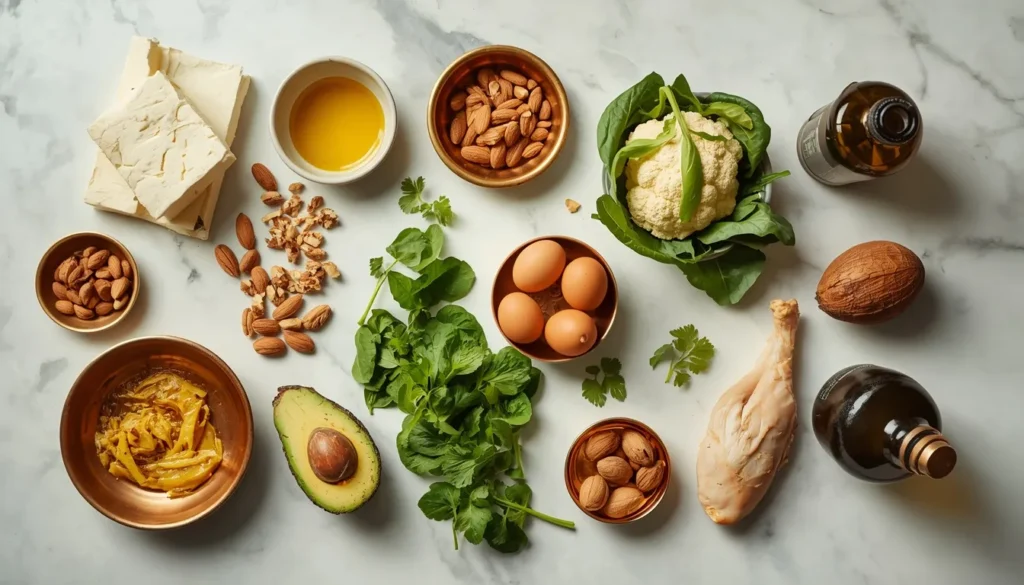

Every few months, a new diet trend takes over Indian WhatsApp groups, Instagram feeds, and office lunch conversations. But the keto diet has managed something most trends don’t — it’s stuck around. Not just in Western wellness circles, but increasingly in Indian homes, particularly among women looking to lose weight, manage PCOS, control blood sugar, or simply break through a plateau that no other diet has been able to shift.
But let’s be honest about the confusion it creates too. High fat, low carb sounds completely backwards to anyone who grew up eating dal-chawal and roti-sabji as the foundation of every meal. Giving up rice? Skipping dal? Saying no to the atta roti your mother has been making since forever? It sounds extreme — and it is, in some ways. But it’s also more adaptable to Indian eating than most people realise, once you understand the principles.
This guide is everything you actually need to know — the science, the Indian-specific food list, an honest look at the side effects, what it means for PCOS and hormonal health, and a practical 7-day Indian keto meal chart you can start with this week.
What Is the Keto Diet, Actually?
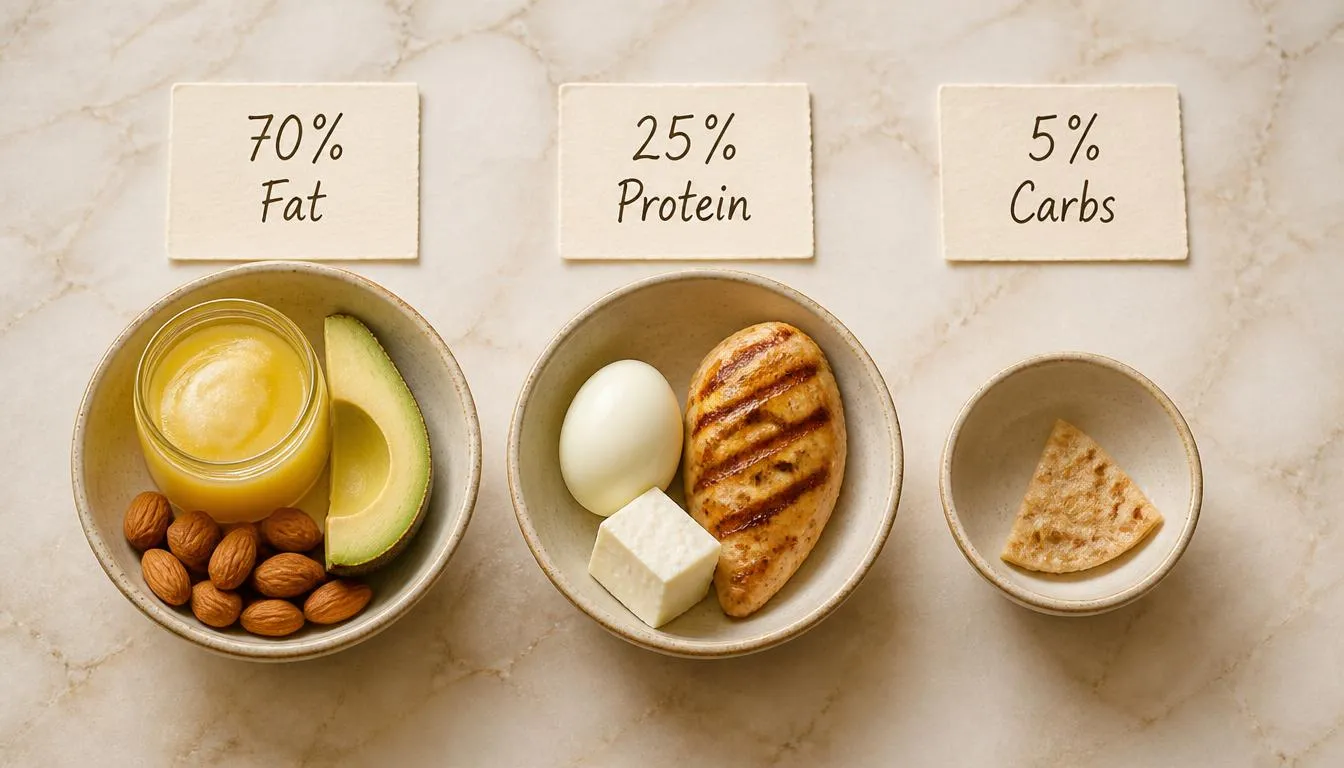
The ketogenic (keto) diet is a low-carbohydrate, high-fat, moderate-protein eating pattern. The standard keto macro ratio is approximately 70% fat, 20–25% protein, and 5–10% carbohydrates. On a 1,800-calorie diet, this translates to roughly 140g fat, 90–112g protein, and 20–45g carbs per day.
To put that in perspective: a single medium roti contains approximately 15g of carbs. A cup of cooked rice has around 45g. A bowl of dal has roughly 22g. On a strict keto diet, your entire day’s carbohydrate allowance is 20–50g — which means one bowl of dal essentially uses up your entire daily quota.
This is what makes keto genuinely challenging for Indian eating patterns — and why understanding it properly before starting matters.
How Ketosis Works
Normally, your body uses glucose (from carbs) as its primary energy source. When carb intake is significantly reduced to 20–50 grams per day, your body runs out of glucose reserves and starts breaking down fat into molecules called ketones, which serve as an alternative fuel.
This state — ketosis — is what makes the keto diet work for weight loss. When the body is in ketosis, reduced insulin levels prevent fat storage, high-fat foods keep you full for longer, and the body becomes proficient at using stored fat as energy.
On average it takes about 5–7 days to transition into ketosis after significantly reducing carb intake — though this varies between individuals based on metabolic rate, activity level, and how dramatically carbs are reduced.
Benefits of the Keto Diet for Indian Women — What Research Actually Shows
Weight Loss — Particularly Belly Fat
One of the most well-known advantages of the Indian keto diet is its ability to aid in weight loss. A keto diet burns stored fat for fuel, which is particularly effective for reducing visceral abdominal fat. For Indian women who tend to accumulate weight around the abdomen — partly due to insulin resistance which is extremely common in the South Asian population — this targeted fat-burning effect is particularly relevant.
Better Blood Sugar and Insulin Control
The low-carb aspect of the Indian keto diet can help regulate blood sugar levels. The diet may be especially advantageous for people with type 2 diabetes or those at risk of developing the condition, because it reduces blood sugar spikes and the need for insulin.
This is significant in the Indian context because India has the world’s second-largest population of people with diabetes, and insulin resistance is a near-epidemic among urban Indian women — driven by diets high in refined carbohydrates, sedentary lifestyles, and chronic stress.
Improved Energy and Reduced Brain Fog
Some people who follow the Indian keto diet plan claim to have better mental clarity, focus, and cognitive performance. As the body becomes more effective at using fat for energy, many people report having more energy throughout the day — in contrast to the energy fluctuations frequently linked with carbohydrate-heavy diets.
This is particularly noticeable for women who experience significant mid-afternoon energy crashes — a hallmark of blood sugar instability that keto directly addresses.
PCOS — A Specific Benefit Worth Discussing
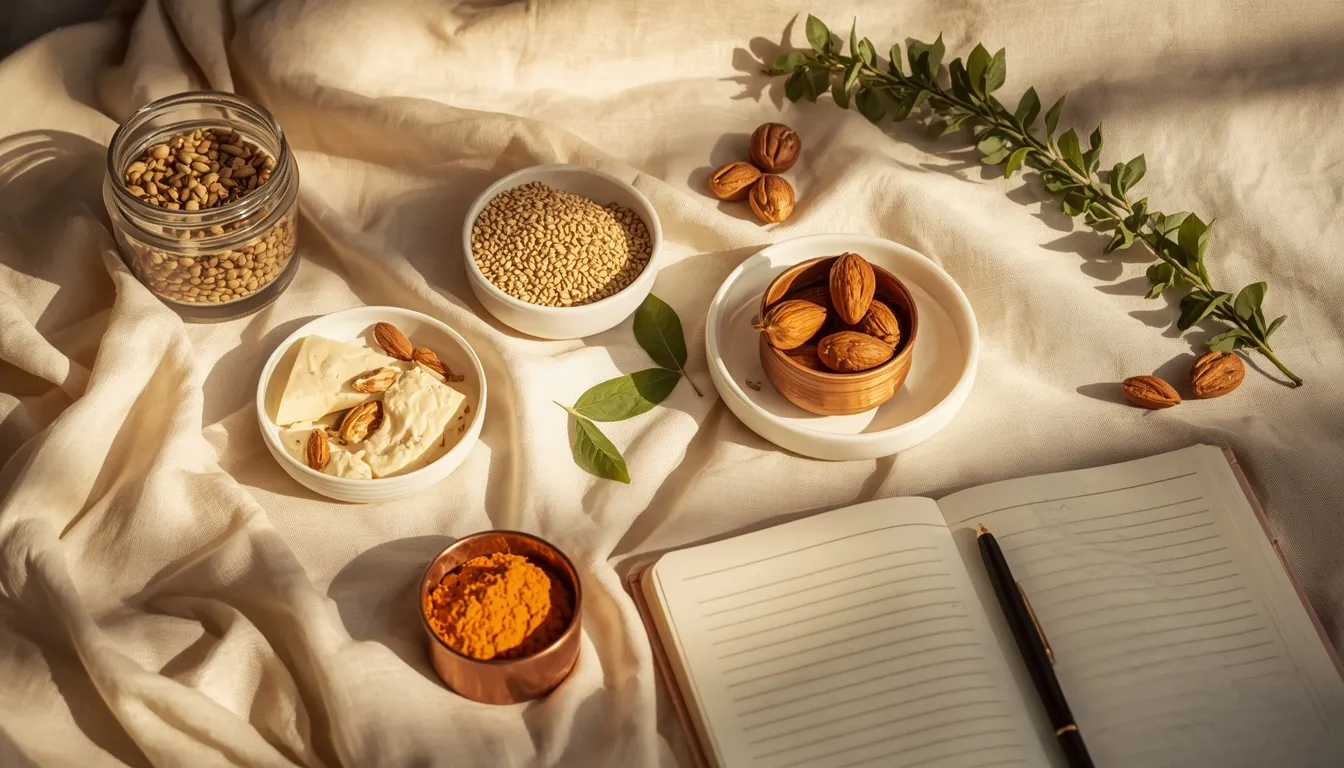
This is where the research gets genuinely interesting for Indian women, given that PCOS is a common hormonal disorder affecting many women, often leading to irregular periods, weight gain, and insulin resistance.
A 2023 meta-analysis published in the Journal of the Endocrine Society reviewed clinical trials on the ketogenic diet’s effect on PCOS. Following 45 or more days of intervention with ketogenic diet among women with PCOS, significant improvement was observed in reproductive hormone levels, with reduced LH/FSH ratio, reduced serum free testosterone, increased serum sex hormone binding globulin (SHBG), and significant weight loss observed unanimously across all included studies.
In plain language: keto improved the hormonal profile of women with PCOS in multiple clinical trials — reducing the excess androgens (male hormones) that cause symptoms like facial hair, acne, and irregular periods.
However, the research also notes important caveats. Some women with PCOS may experience worsening hormonal imbalances on the diet. The keto diet may likely affect thyroid hormone levels and cause hypothyroidism, which can further exacerbate PCOS symptoms. This is why — particularly for Indian women who already have high rates of thyroid disorders — starting keto without medical supervision when you have PCOS or thyroid conditions is not advisable.
What to Eat on an Indian Keto Diet — Complete Food List
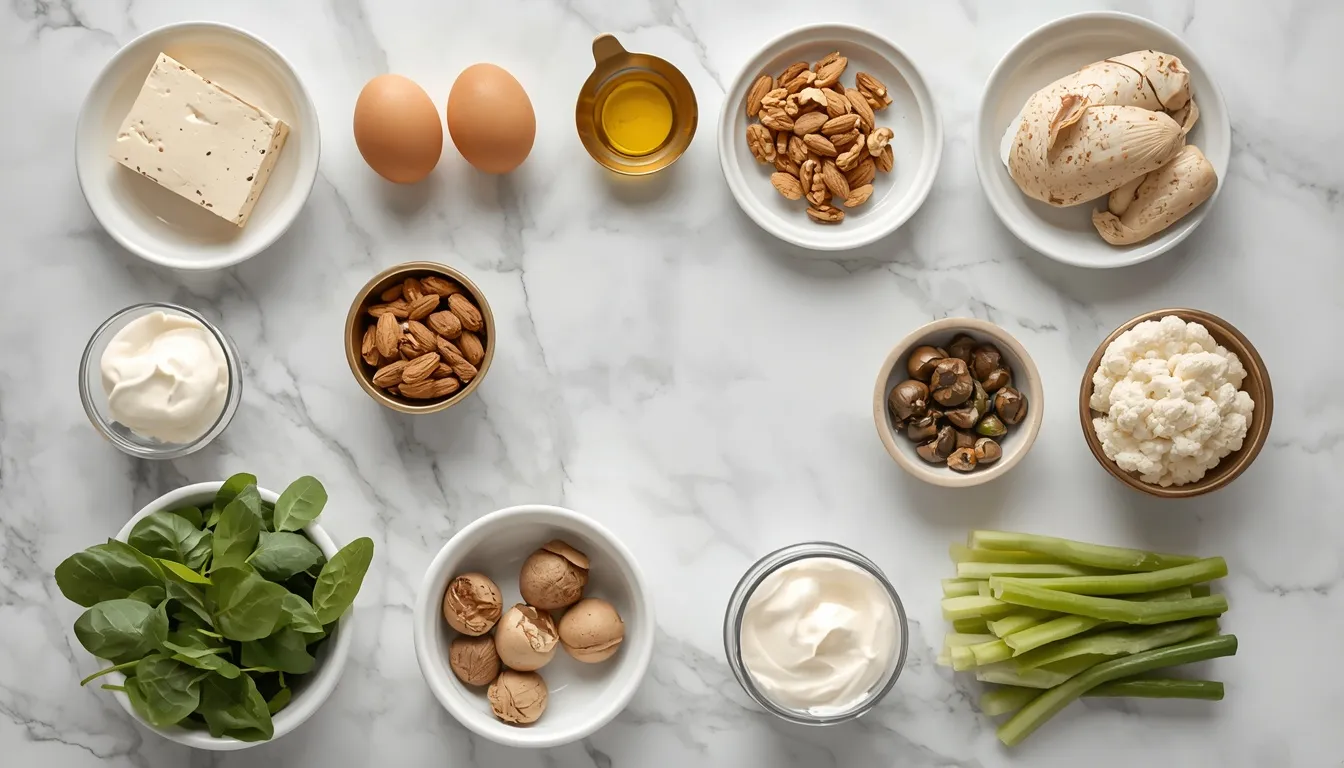
Proteins (Eat Freely)
Vegetarian sources:
- Paneer — the keto MVP for Indian vegetarians. High fat, high protein, virtually zero carbs. Use in bhurji, tikka, curries with cream, or grilled.
- Eggs — in any form, cooked in ghee or butter. Omelettes, boiled, scrambled, egg curry.
- Tofu — good protein alternative to paneer, particularly for those watching saturated fat intake.
- Greek yoghurt (unsweetened, full-fat) — in moderation. Contains some carbs so portion-watch.
- Cheese — paneer, cheddar, mozzarella, cream cheese all work. Avoid processed cheese slices.
Non-vegetarian sources:
- Chicken — all cuts, cooked in ghee, butter, or oil. Tandoori, butter chicken (keto version without sugar), grilled.
- Mutton and lamb — naturally fatty cuts are ideal for keto.
- Fish — salmon, tuna, mackerel, rohu, surmai, rawas. All excellent.
- Prawns and seafood — naturally low carb and high protein.
- Eggs — yes, mentioned again because they truly are the easiest keto food in any Indian kitchen.
Healthy Fats (Eat Generously — This Is the Foundation)
This is the part that feels most counterintuitive to Indian women raised on “fat is bad” messaging — but this is literally where most of your calories come from on keto.
- Ghee — your greatest keto ally. Pure, clarified, traditionally used in Indian cooking for centuries. Cook everything in it.
- Coconut oil — ideal for South Indian cooking and curries. Naturally keto-friendly.
- Butter (unsalted) — for cooking and as a fat source.
- Olive oil — for salads and lower-heat cooking.
- Avocado — high fat, low carb, but expensive and not always available in smaller Indian cities. When you can find it, eat it.
- Nuts — almonds, walnuts, macadamia nuts, pecans. Measure portions as nuts are calorie-dense.
- Seeds — flaxseeds (alsi), chia seeds, pumpkin seeds, sunflower seeds. All keto-friendly.
- Coconut — fresh coconut, coconut cream, full-fat coconut milk. All excellent fat sources for keto.
- Heavy cream (malai) — for curries and beverages instead of milk.
Vegetables — Low-Carb Choices Only
The rule with vegetables on keto: anything that grows above the ground is generally fine. Anything that grows underground (roots, tubers) is generally too high in carbs.
Freely eat:
- Spinach (palak)
- Cauliflower (phool gobhi) — the keto workhorse. Rice substitute, mash substitute, roti substitute.
- Cabbage (patta gobhi)
- Broccoli
- Zucchini (turai/courgette)
- Bell peppers (shimla mirch) — in moderation
- Mushrooms
- Bottle gourd (lauki)
- Bitter gourd (karela)
- Cucumber (kheera)
- Tomatoes — in small amounts (contain some sugar)
- Methi (fenugreek leaves)
- Coriander, mint — freely as garnishes
Avoid or severely limit:
- Potatoes (aloo) — very high carb
- Sweet potatoes (shakarkand)
- Peas (matar)
- Carrots (gajar) — moderate carb, limit strictly
- Corn (makka)
- Beetroot
Dairy
- Full-fat paneer ✓
- Full-fat dahi (plain, unsweetened) — in moderation
- Buttermilk (chaas, unsweetened) — in moderation
- Heavy cream — freely
- Butter — freely
- Cheese (full-fat, natural) — freely
Beverages
- Water — as much as possible
- Green tea (unsweetened)
- Black coffee or coffee with heavy cream (no sugar, no milk)
- Nimbu pani without sugar — add a pinch of salt and jeera powder
- Coconut water — in small amounts (contains natural sugars, monitor)
- Herbal teas (unsweetened)
Bulletproof coffee — popular in Indian keto communities: blend black coffee with 1 tbsp ghee or butter and 1 tbsp coconut oil. Provides sustained energy and fat without carbs.
Foods to Avoid on Keto
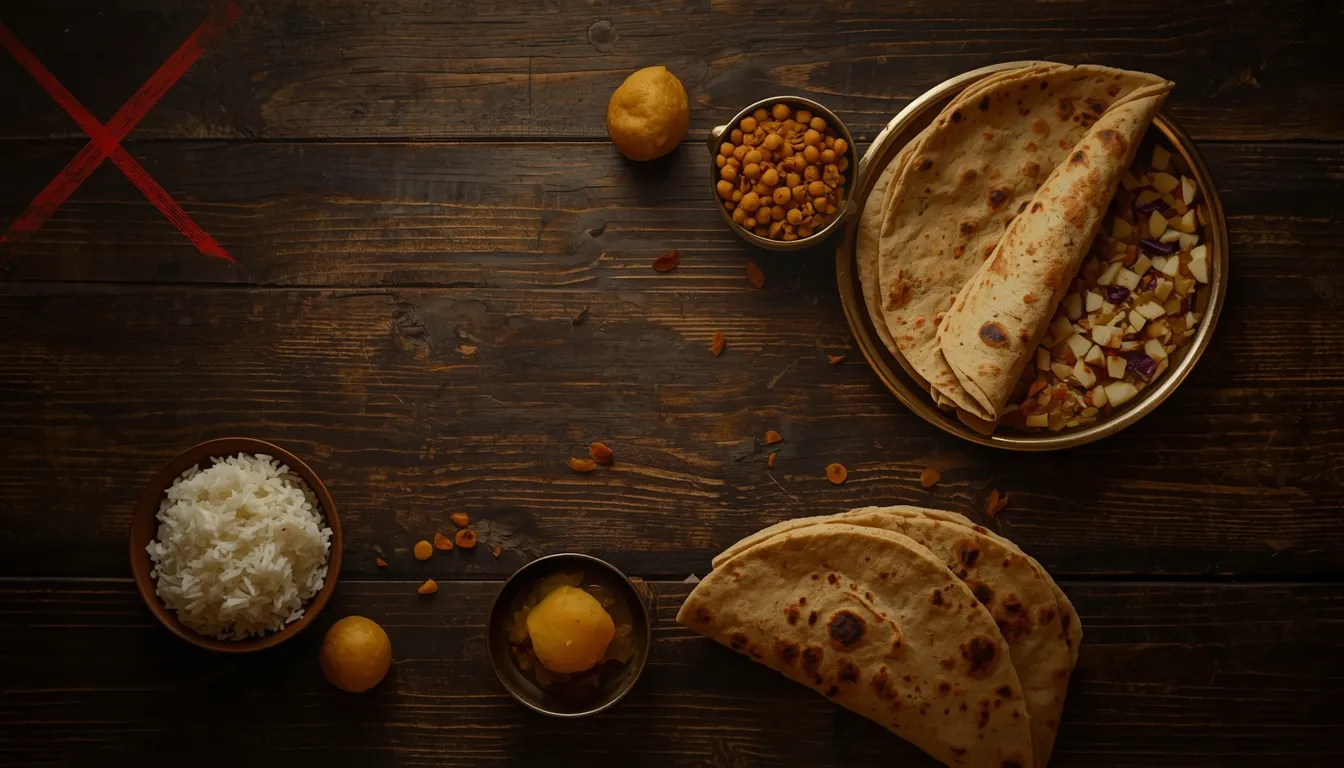
This is the hardest part for Indian eating patterns — and it’s important to be clear about it rather than sugarcoat:
| Category | Avoid |
|---|---|
| Grains | Rice, wheat (atta), maida, oats, bajra, jowar, ragi — all high carb |
| Dal and Legumes | Masoor dal, chana dal, moong dal, rajma, chole, black chana — too high carb for strict keto |
| Bread | Roti, chapati, naan, paratha, puri, bread — all high carb |
| Starchy vegetables | Potato, sweet potato, peas, corn, beetroot |
| Most fruits | Mangoes, bananas, grapes, apples, oranges — all too high in sugar. Exception: berries in small amounts, avocado |
| Sugar in all forms | Sugar, jaggery (gud), honey, maple syrup — all break ketosis |
| Packaged snacks | Biscuits, namkeen, chips, murukku — all high carb |
| Sweet drinks | Chai with sugar and milk, fruit juices, cold drinks, packaged lassi |
| Most Indian sweets | Barfi, ladoo, halwa, kheer — all break ketosis immediately |
Smart Indian Keto Substitutions
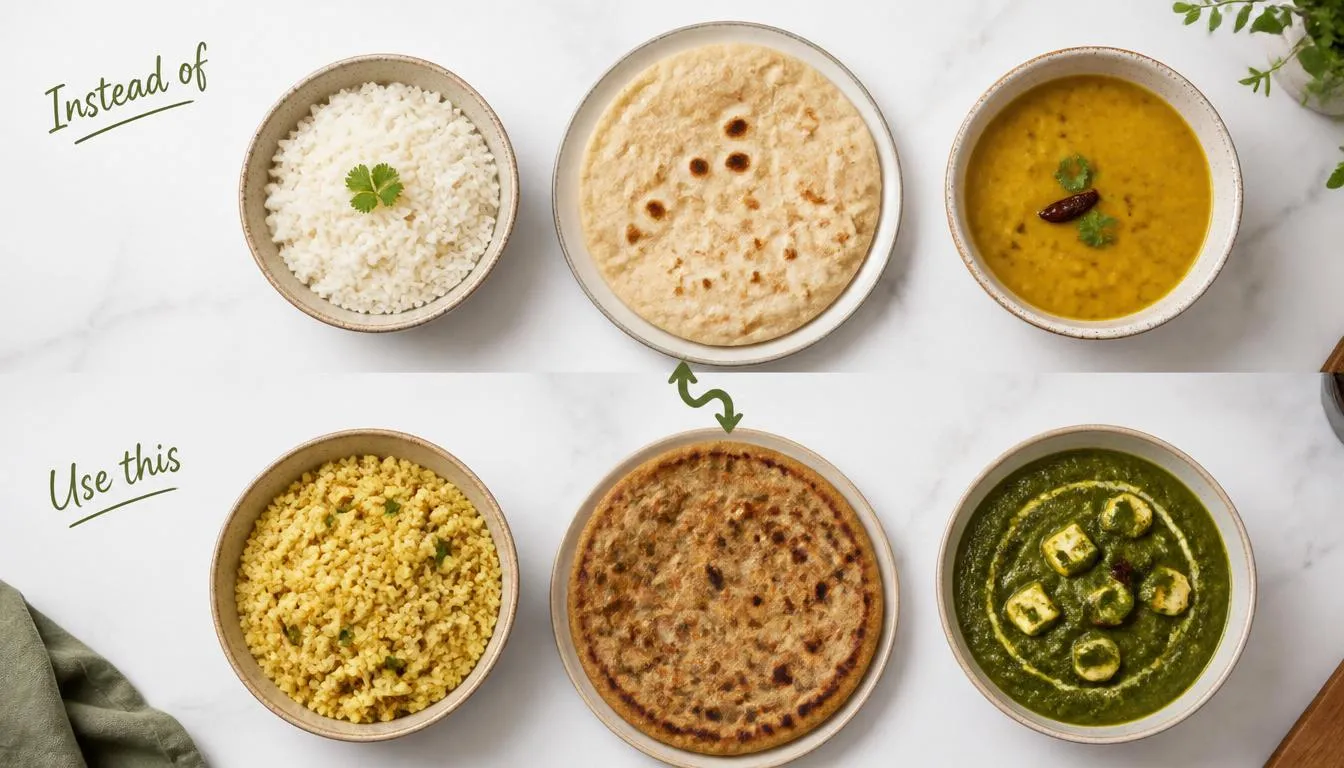
The question every Indian woman asks when starting keto: “But what do I eat instead of roti and rice?”
Here are the substitutions that actually work in Indian cooking:
Instead of rice: Cauliflower rice — grate or pulse cauliflower in a mixer, sauté in ghee with cumin and salt. Remarkably close to texture.
Instead of roti: Almond flour roti (besan can be used in small amounts), flaxseed roti, or simply serve your sabji and curry in a bowl without any bread.
Instead of dal: Palak paneer, paneer bhurji, egg curry, or mushroom masala as your protein-rich main dish.
Instead of regular chai: Green tea, black coffee with cream, or a small cup of chai made with heavy cream (malai) and no sugar.
Instead of regular dahi: Full-fat Greek yoghurt or hung curd (thick, drained dahi) in small portions.
Instead of potato in curries: Cauliflower, mushrooms, or paneer in the same masala base.
7-Day Indian Keto Diet Plan
This meal plan works for both vegetarians and includes non-vegetarian options. Adjust portion sizes and meal selections to your specific needs and tastes, and consult a healthcare practitioner before beginning, especially if you have underlying health conditions.
Day 1 — Monday
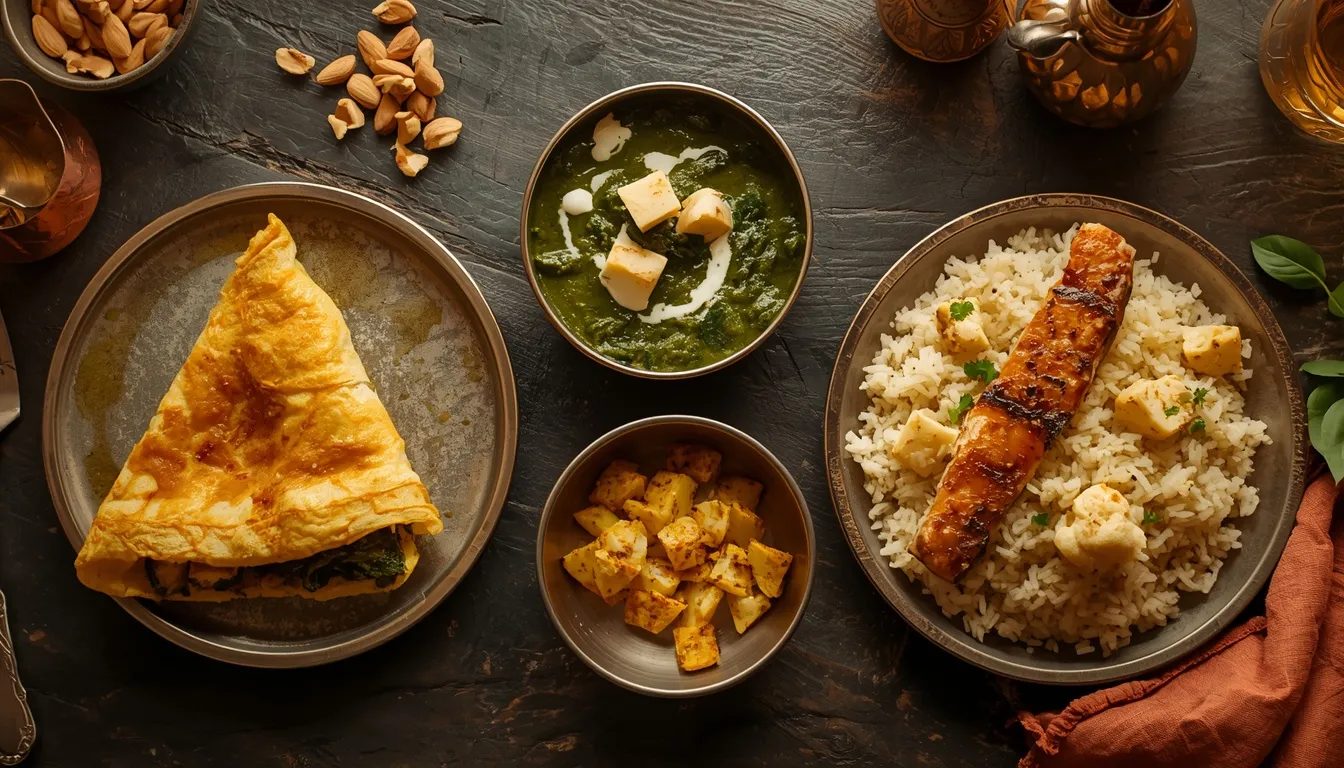
Breakfast: Masala omelette (2–3 eggs) cooked in ghee with spinach, green chilli, and cheese Lunch: Palak paneer with a side salad dressed with olive oil and lemon Snack: Handful of almonds and walnuts Dinner: Grilled fish or chicken tikka with cauliflower rice and cucumber raita (unsweetened dahi)
Day 2 — Tuesday
Breakfast: Paneer bhurji cooked in ghee with chopped onion, tomato, and turmeric Lunch: Mushroom masala (cooked in cream and butter) with a cucumber salad Snack: Cheese cubes and a few walnuts Dinner: Mutton or chicken curry (keto version — no flour, no potato) with cauliflower mash
Day 3 — Wednesday
Breakfast: Bulletproof coffee + 2 boiled eggs with chaat masala Lunch: Keto egg curry in a coconut milk and tomato gravy with sautéed spinach Snack: Unsweetened buttermilk with roasted jeera powder and black salt Dinner: Paneer tikka (marinated in dahi, spices, and ghee, grilled or baked) with roasted bell peppers
Day 4 — Thursday
Breakfast: Vegetable omelette (eggs, capsicum, mushrooms, coriander) in butter Lunch: Lauki (bottle gourd) sabji in coconut milk with paneer cubes Snack: Coconut chips or a small piece of dark chocolate (85%+ cocoa, 2 squares maximum) Dinner: Grilled salmon or rohu with sautéed methi and garlic in ghee
Day 5 — Friday
Breakfast: Full-fat Greek yoghurt with flaxseeds (alsi) and a pinch of cinnamon — no fruit Lunch: Butter chicken (keto recipe — no sugar, thickened with cream not flour) with cauliflower rice Snack: Cucumber sticks with hung curd dip and chaat masala Dinner: Palak paneer or palak chicken with sautéed mushrooms
Day 6 — Saturday
Breakfast: Paneer scramble with turmeric, green chilli, and ghee + green tea Lunch: Keto khichdi — cauliflower rice with ghee, jeera, and a boiled egg or paneer Snack: Handful of roasted pumpkin seeds and almonds Dinner: Mutton seekh kebab with mint chutney (no sugar) and a salad with olive oil dressing
Day 7 — Sunday
Breakfast: Masala omelette with avocado (if available) or extra paneer Lunch: Fish curry in coconut milk with sautéed spinach and cauliflower rice Snack: Bulletproof coffee or a small portion of full-fat dahi Dinner: Tandoori chicken or paneer tikka with roasted cauliflower and a salad
Snacks that work all week: Almonds, walnuts, macadamia nuts, cheese cubes, cucumber with hung curd, roasted seeds, unsweetened buttermilk.
Quick 5-Minute Practice ✨ Before every meal this week, spend 60 seconds mentally checking: Is this meal mostly fat? Is the protein moderate? Are the carbs under 10g for this dish? You don’t need to weigh everything obsessively — but building this checking habit in the first week helps you develop the intuitive understanding of keto macros that makes the diet sustainable without constant tracking. By day 7, this check becomes automatic.
The Keto Flu — What It Is and How to Get Through It
Almost everyone who starts keto experiences what’s called the “keto flu” in the first week. A keto flu is a temporary group of symptoms that show up around 2–7 days after starting a keto diet — fatigue, headache, nausea, dizziness, and lethargy as your body adapts to using fat as fuel. The keto flu usually goes away within 1–2 weeks of beginning the diet.
What causes it: When you reduce carbs, your body rapidly excretes water and along with it, key electrolytes — sodium, potassium, and magnesium. This electrolyte loss is the primary driver of keto flu symptoms.
How to manage it:
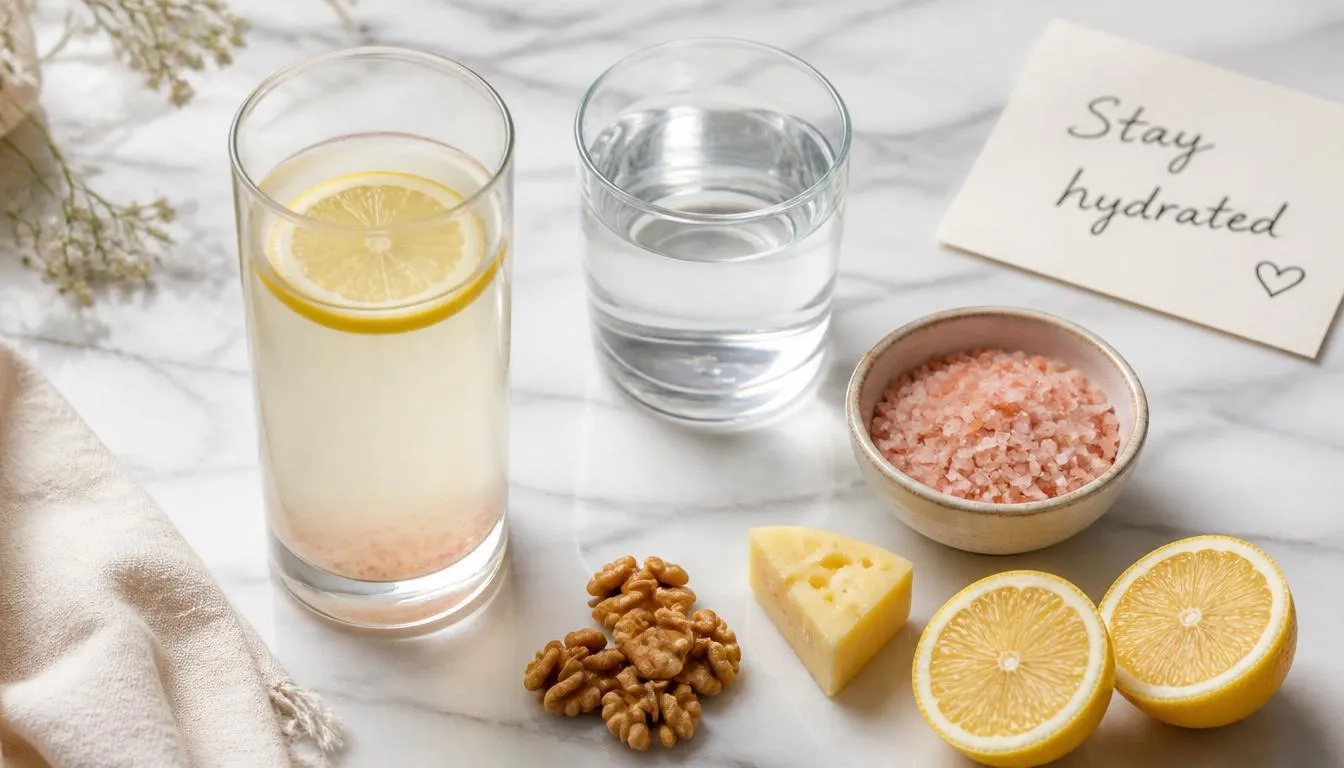
Stay well hydrated and replenish electrolytes through salted lemon water or homemade nimbu pani (without sugar). Reduce carbs gradually rather than cutting them all at once. Include fibre-rich low-carb vegetables like spinach, broccoli, and cauliflower in every meal.
Specifically for Indian women — add a pinch of pink Himalayan salt or rock salt (sendha namak) to your water throughout the day. Have unsweetened buttermilk with roasted jeera and black salt — it’s a natural electrolyte drink that Indian kitchens have used for centuries.
Who Should NOT Start Keto Without Medical Supervision
The keto diet is not suitable for everyone. According to a review published in Frontiers in Nutrition, ketogenic diets may increase chronic disease risk through higher intake of saturated fat and reduced intake of protective foods like fruits, vegetables, and whole grains.
Be especially cautious or get professional guidance first if you:
- Have hypothyroidism — keto can affect thyroid hormone conversion. If your thyroid is already underactive, keto may worsen symptoms. Consult your doctor.
- Have PCOS with thyroid complications — while keto can benefit PCOS, the thyroid connection means medical supervision is important
- Are pregnant or breastfeeding — this is not the time for dietary extremes
- Have a history of eating disorders — the restrictive nature of keto can trigger disordered eating patterns
- Have kidney disease — the higher protein intake requires kidney monitoring
- Are above 60 — metabolic changes at this age require professional guidance
- Have type 1 diabetes — requires very careful medical management if attempting keto
Practical Tips for Making Indian Keto Work Long-Term
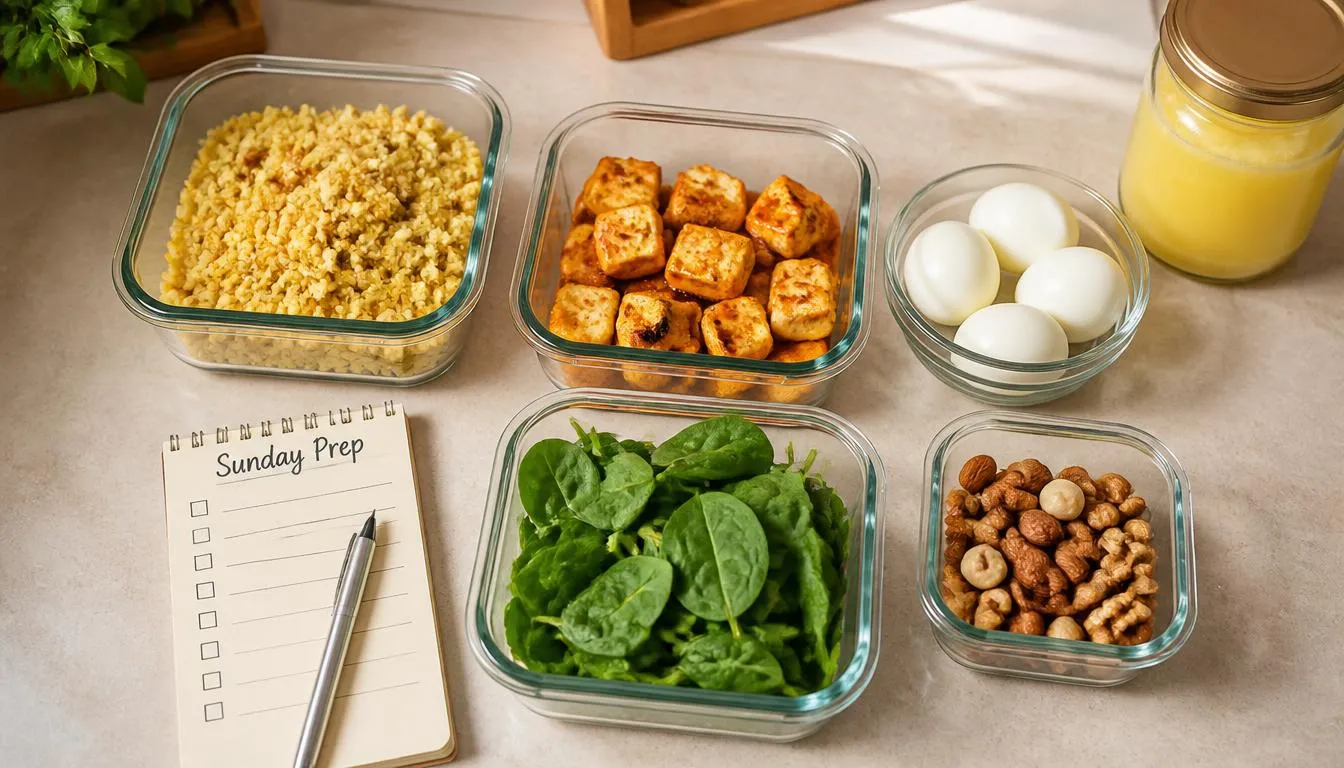
Meal prep on Sundays. The biggest reason people fall off keto in India is the sudden craving for carbs when there’s nothing keto-friendly to eat. Cook a batch of paneer tikka, make cauliflower rice, boil eggs — having keto food ready prevents the moment of weakness.
Master the cauliflower. Cauliflower rice, cauliflower mash, cauliflower in curries — this vegetable is the single most versatile keto substitute in an Indian kitchen. Once you’re comfortable cooking it, half your meal planning problems disappear.
Use your spices freely. Turmeric, cumin, coriander, garam masala, methi, curry leaves, green chilli — most Indian spices like turmeric, cumin, coriander, and chilli powder are keto-friendly. The flavour of Indian food doesn’t have to disappear on keto — only the carbohydrate vehicles change.
Be careful at restaurants. Most Indian restaurant food contains hidden sugar (in gravies, marinades, and sauces) and is thickened with flour. When eating out, stick to tandoori items, grilled meats, paneer dishes with cream-based gravies, and salads. Ask for no gravy flour-thickening when possible.
No cheat days — unlike other diets. Unlike some other diets, a single high-carb cheat meal can knock you out of ketosis. It may take 3–7 days to return to a fat-burning state. This is a strict requirement of keto that makes it different from other approaches — and one of the harder aspects for anyone with an active Indian social life full of festivals, weddings, and family gatherings.
Track for at least the first month. Use a free app like Cronometer or MyFitnessPal to log your food for the first 4 weeks. Most people overestimate how few carbs they’re eating. Hidden carbs in vegetables, dairy, and spice mixes can quietly add up and prevent ketosis without you realising it.
Keto for Vegetarian Indian Women — Is It Possible?
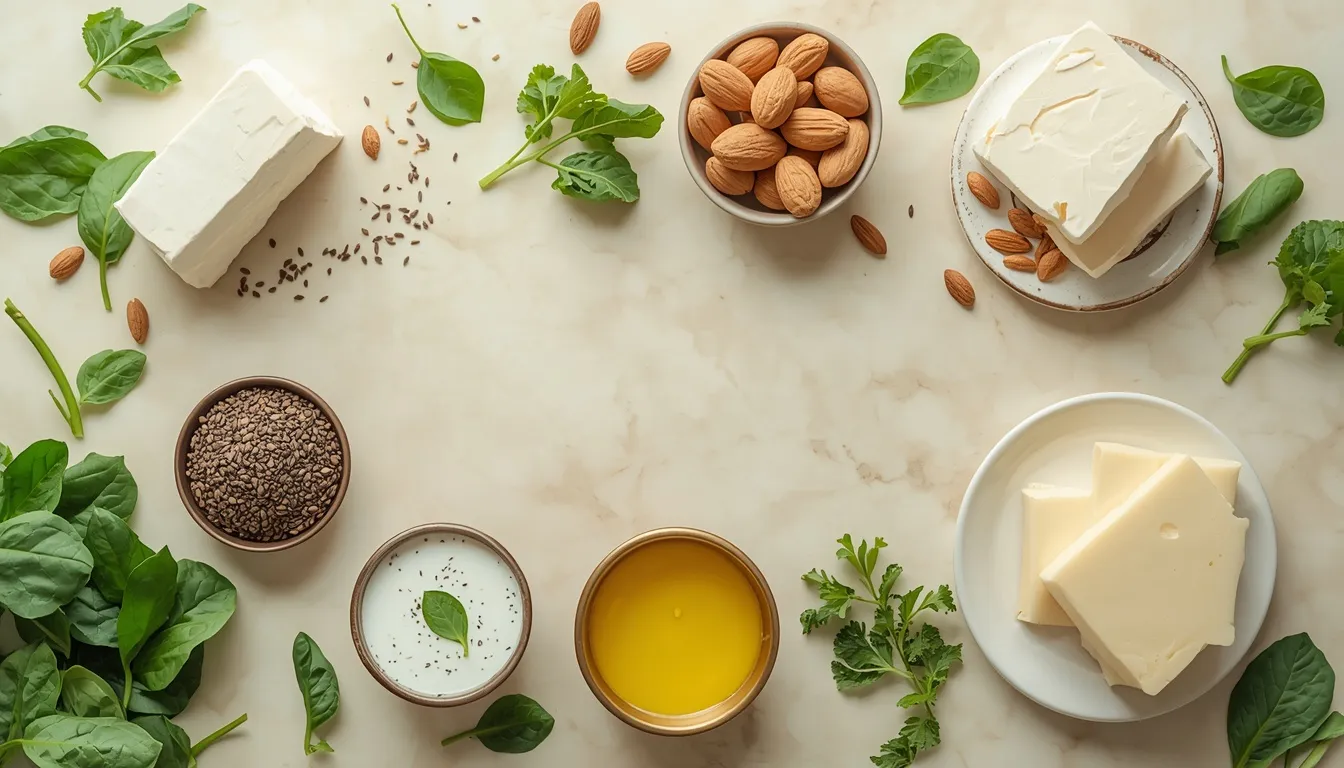
Yes — but it requires more careful planning than the non-vegetarian version. Since traditional legume-based protein sources like dal and chole are high in carbs, they need to be replaced. Combining paneer with seeds like flax, chia, and hemp ensures a more complete amino acid profile.
The vegetarian keto pillars for Indian women:
- Paneer (primary protein)
- Eggs (if ovo-vegetarian)
- Tofu
- Full-fat dairy (dahi, cheese, cream)
- Nuts and seeds
- Low-carb vegetables
The genuine challenge: Indian vegetarian cooking is heavily legume and grain-based. Giving up dal, rajma, chole, chana, and rice simultaneously is a significant shift. Paneer alone can become monotonous quickly. The solution is variety — paneer tikka, paneer bhurji, palak paneer, paneer in cream sauces, grilled paneer — and rotating it with tofu, eggs, and different nuts and seed preparations.
Frequently Asked Questions
How quickly will I lose weight on an Indian keto diet plan?
Most beginners notice weight loss and improved energy within 2 to 4 weeks, though consistent adherence is essential for long-term results. The first week often shows rapid weight loss — but most of this is water weight, not fat. True fat loss becomes visible from week 3–4 onwards with consistent adherence.
Can I eat roti or rice at all on keto?
Standard wheat roti (15g carbs each) and rice (45g per cup) are too high in carbohydrates for ketosis. However, small amounts of almond flour roti or flaxseed roti made at home can fit within a modified keto plan. Strict keto means no regular roti or rice. Modified or low-carb diets allow very small portions.
Is ghee good or bad on keto?
Ghee is one of the best foods for keto. It is pure fat (primarily saturated and monounsaturated fatty acids), contains zero carbs, has a high smoke point making it ideal for Indian cooking, and is deeply aligned with Ayurvedic wellness traditions. Eat it freely.
Can I drink chai on keto?
Regular chai made with milk and sugar is not keto-compatible. However, you can make keto chai with a small amount of heavy cream (malai), your spices, and a keto-friendly sweetener like stevia. Many keto followers simply switch to green tea or black coffee.
How much paneer can I eat on keto?
Paneer is one of the most keto-friendly Indian foods — 100g of paneer contains approximately 1.2g of carbs, 20g of protein, and 20g of fat. Most keto plans for Indian vegetarians recommend 150–200g of paneer daily as a primary protein source.
Will keto affect my periods?
It can, particularly in the first month as your body adjusts hormonally. Some women experience delayed or irregular periods initially. For most women, this normalises after the adjustment period. However, if you have PCOS, thyroid issues, or existing hormonal irregularities, discuss with your gynaecologist before starting.
Can I follow keto during festivals and family gatherings?
This is the most honest challenge of keto in India. Festival foods — laddoos, kheer, puris, biryani — are almost entirely off-limits on strict keto. Many people choose to do a modified low-carb approach during festival seasons rather than strict keto, then return to strict keto after. Planning ahead, eating before events so you arrive not hungry, and focusing on the gathering rather than the food are practical strategies.
The Bottom Line
The keto diet is not a fad — it’s a well-researched metabolic approach that has produced real, documented results for weight loss, blood sugar management, and even PCOS in clinical studies. For Indian women specifically, the benefits are particularly relevant given the epidemic rates of insulin resistance, PCOS, and type 2 diabetes in our population.
But it’s also genuinely demanding in the Indian context. Giving up dal, roti, rice, and most fruits is not a minor adjustment — it’s a fundamental restructuring of the way most Indian women eat. It works best when started gradually, planned carefully, and ideally supported by a nutritionist who understands both the keto science and Indian food culture.
If you’re considering it: start by cutting sugar first. Then reduce rice and roti portions. Let your body adjust for two weeks before going strict. And make your kitchen work with you — stock paneer, ghee, nuts, eggs, and cauliflower as your staples, and the transition becomes significantly more manageable.
Your body is capable of remarkable adaptation. Give it the right conditions and the right foods — and give it time.
Also read on CGlows:
- [Signs of Hormonal Imbalance in Women — What Your Body Is Telling You]
- [Best Foods for Gut Health in India — Your Microbiome Matters]
- [Morning Routine for Women to Feel Energised All Day]
Disclaimer: This article is for general informational and educational purposes only. It is not a substitute for professional medical or nutritional advice. The keto diet involves significant dietary changes that can affect various health conditions. Please consult a qualified doctor or registered dietitian before beginning a ketogenic diet, especially if you have diabetes, thyroid disorders, PCOS, kidney disease, or any other health condition.
Discover more from CGlows
Subscribe to get the latest posts sent to your email.