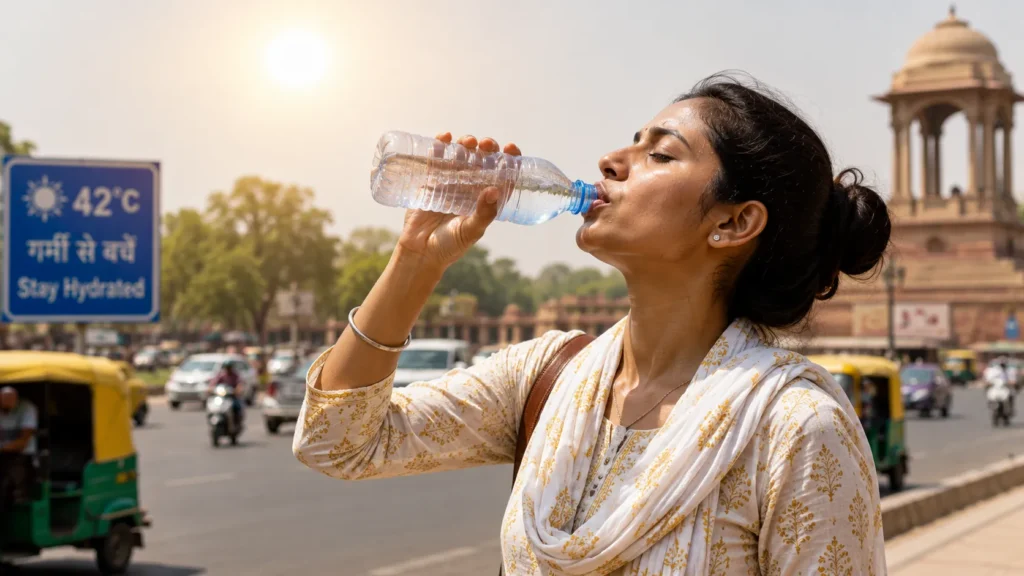

Every summer, the same advice does its rounds — drink 8 glasses of water a day, no excuses. Your mother says it. Your fitness app reminds you. That WhatsApp forward from your mausi insists on it. But here’s the thing nobody tells you: that number might not be as magical as we’ve all been led to believe.
So, does the “8 glasses of water a day” rule actually hold up in the scorching Indian summer? Or is it one of those wellness myths we’ve just been repeating out of habit? Let’s get into it.
Where Did the “8 Glasses of Water a Day” Rule Come From?
The origin of this advice is more boring — and more misunderstood — than you’d expect. Back in 1945, the U.S. Food and Nutrition Board recommended that adults consume roughly 2 litres of water per day. Somewhere along the way, people dropped the fine print: that recommendation included all water from food and beverages combined, not just plain drinking water.
That nuance got lost, and “8 glasses of pure water, every single day” became the gospel truth for generations.
Here’s what modern science actually says: there is no universal evidence that healthy adults need exactly 8 glasses of water daily. Research published in Science found that hydration needs vary dramatically based on age, activity level, body weight, climate, and the foods you eat. One study of over 800 elderly adults even found no signs of dehydration among those who routinely drank fewer than six glasses a day.
The short version? Eight is a rough guideline — not a biological law.
Why Summer Changes Everything
That said, summer in India is a whole different beast. Whether you’re in Delhi sweating through a 45°C afternoon or navigating Mumbai’s humid monsoon heat, your body is working overtime to keep you cool — and that means losing more fluids through sweat than usual.
High temperatures increase your fluid needs. But that doesn’t automatically mean everyone should be gulping down exactly eight glasses on the clock, regardless of how they feel. What summer does mean is that you need to pay more attention to your hydration than you would in cooler months, and be smarter about how you approach it.
How Much Water Do You Actually Need?
Here’s the truth nobody likes to hear: it depends. But that’s not an unhelpful answer — it’s actually freeing, because it means you can stop stressing over hitting an arbitrary number.
Your daily water intake is influenced by:
- Your body weight — A general guideline from health experts is to aim for roughly half an ounce to one ounce of fluid per pound of body weight (or about 30–35 ml per kg). If you exercise or are outdoors in the heat, lean toward the higher end.
- Your activity level — If you’re working out, doing yoga, or even commuting in the sun, you need more.
- What you eat — Foods like cucumber, watermelon, dahi (curd), lassi, and dal contain significant water. If your diet is rich in fruits and vegetables, you’re already getting more hydration than you realise.
- Your health — Certain conditions like kidney issues or urinary tract infections may require adjusting your intake under a doctor’s guidance.
As a general reference, the Institute of Medicine suggests around 3 litres per day for men and 2.2 litres for women — but again, this includes all sources of fluid, not just water you drink from a bottle.
The Part Nobody Talks About: Overhydration Is Real
Yes, you read that right. You can drink too much water — and the consequences can be surprisingly serious.
When you consume far more water than your kidneys can process (which is roughly 1 litre per hour, by the way), it begins to dilute the sodium levels in your blood. This condition is called hyponatremia, or more commonly, water intoxication or overhydration.
Your kidneys are efficient, but they have their limits.
Warning Signs of Overhydration
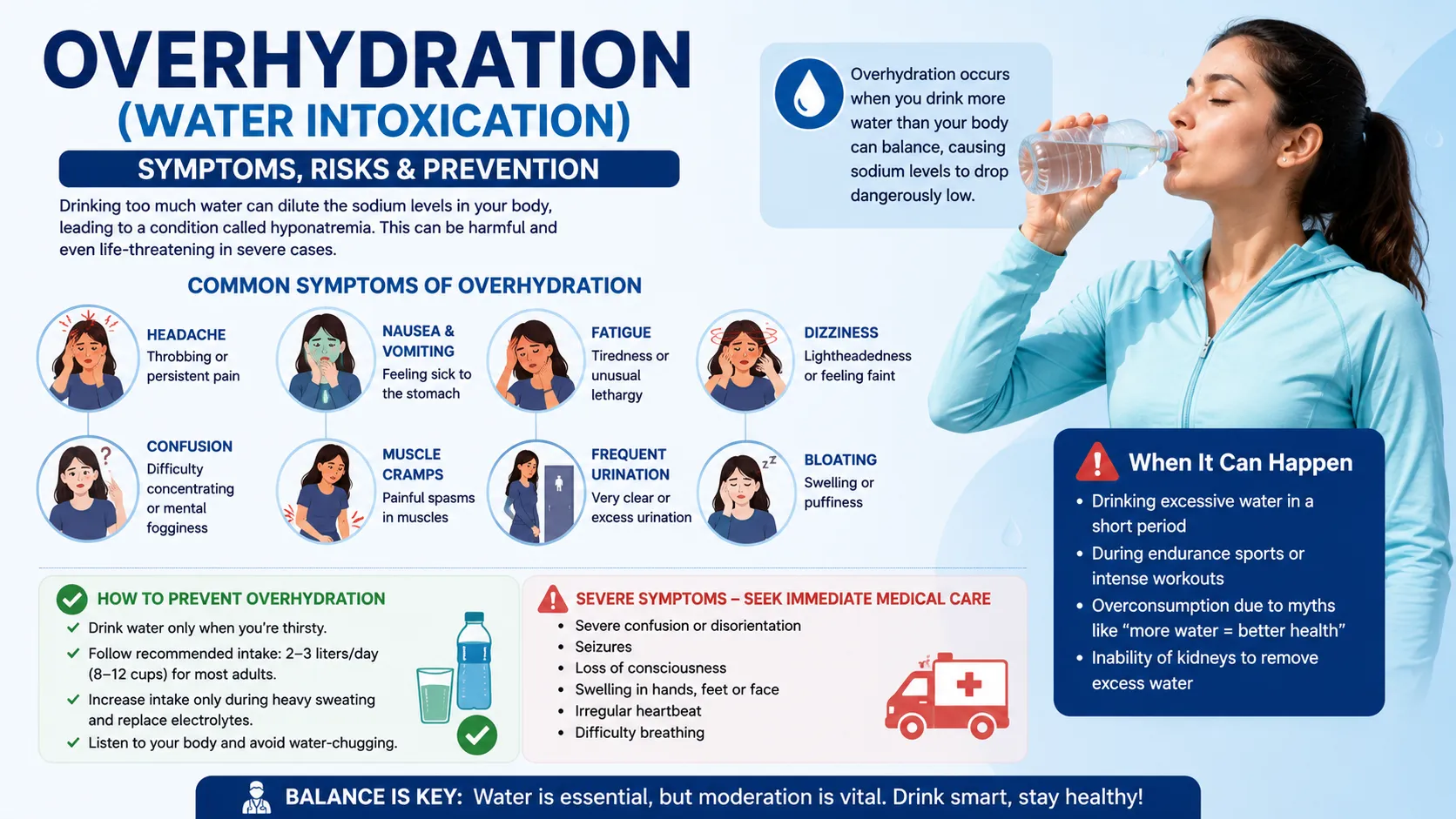
If you’ve been forcing yourself to chug water all day “for health,” watch out for these symptoms:
- Nausea or an upset stomach
- Persistent headaches
- Feeling unusually tired or foggy
- Muscle cramps or weakness
- Bloating or swelling (particularly in the hands and feet)
- Confusion or difficulty concentrating
In severe cases, overhydration can affect brain function and, in rare instances, cause seizures. Doctors who see patients for routine lab work in summer often find sodium and chloride levels that are too low — a direct result of drinking excessive water without balancing electrolytes.
This doesn’t mean water is the enemy. A little extra water on a hot day is perfectly fine. But forcing yourself to drink beyond what your body is asking for is not a wellness habit — it’s a strain on your system.
The Best Way to Know If You’re Hydrated
Forget the 8-glass countdown. The two most reliable indicators of hydration are ones you already have access to:
1. Thirst (With a Small Caveat)
Your body is remarkably good at signalling when it needs water. If you’re thirsty, drink. That said, thirst can sometimes kick in after mild dehydration has already begun — especially in older adults or during intense exercise — so don’t wait until you’re parched before reaching for a glass.
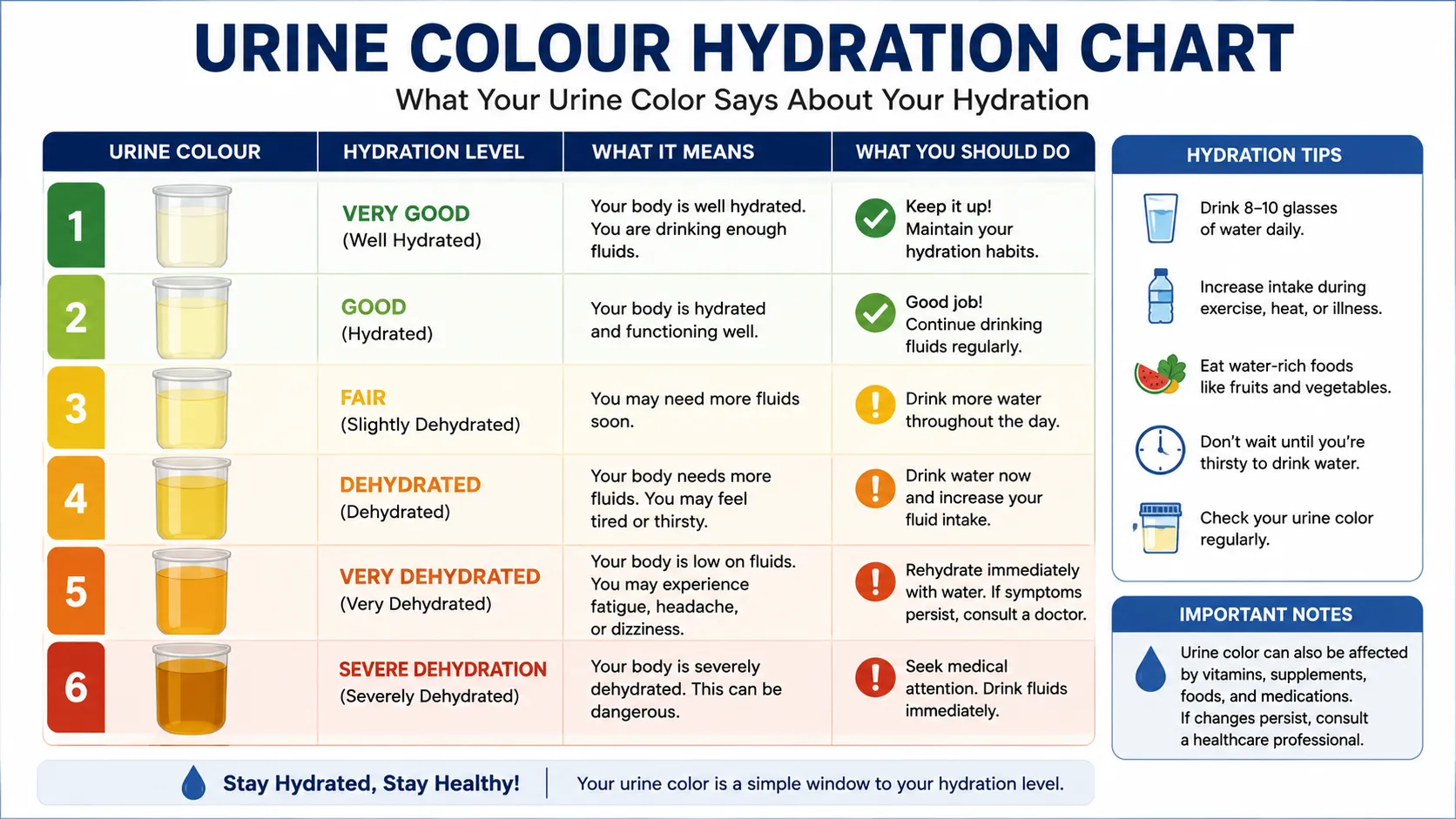
2. Urine Colour
This is probably the easiest hydration check you can do. Aim for pale yellow — the colour of diluted lemonade.
- Dark yellow or amber: You need more water, soon.
- Completely clear: You may actually be overhydrating.
A quick glance every time you use the loo can tell you more than any app or rule ever could.
Smart Summer Hydration: What Actually Works
Instead of counting glasses, here’s a more practical approach — especially for Indian summers:
Start your morning with water. A glass or two first thing in the morning helps kickstart your system, especially after 7–8 hours of no fluids while sleeping.
Eat your water. Load up on water-rich summer foods — tarbuz (watermelon), khira (cucumber), naariyal paani (coconut water), tomatoes, and citrus fruits. These also provide natural electrolytes your body needs.
Don’t skip electrolytes. This is where many of us go wrong during summer. Drinking only plain water when you’re sweating heavily can actually dilute your electrolytes further. Add a pinch of rock salt and lemon to your water, sip on nimbu paani, or eat potassium-rich foods like bananas and avocados to stay balanced.
Drink before, during, and after physical activity. If you’re exercising or outdoors, aim for a glass of water roughly every 15–20 minutes of activity.
Avoid chugging large quantities at once. Sipping steadily throughout the day is far better than forcing down three glasses in one go just to “meet your daily quota.”
Adjust for your day. A lazy Sunday at home in an AC room is not the same as a day of outdoor meetings in May heat. Your intake should shift accordingly.
Quick 5-Minute Practice
Morning Hydration Check-In
Before you reach for your chai, try this simple two-step ritual:
- Drink one full glass of water (room temperature or warm).
- Notice how your body feels — thirsty, neutral, or already satisfied?
This sets a mindful tone for the day and helps you start tuning into your body’s actual cues, rather than following an external number blindly.
The Bottom Line
The “8 glasses of water a day” rule isn’t wrong exactly — it’s just not the complete picture. For many people, it’s a reasonable goal. For others, it could be too much or too little depending on their body, lifestyle, and the kind of summer day they’re having.
What you actually need is to listen to your body — drink when you’re thirsty, check your urine colour, eat hydrating foods, and balance water with electrolytes, especially in the heat. And please, stop forcing yourself to down giant bottles of water out of guilt. More water is not always more health.
Stay cool, stay hydrated — but do it smartly. 💧
ALSO READ – 5 Budget Ways to Turn Your Bedroom into a Minimalist Aesthetic Sanctuary
Disclaimer: This article is for general informational purposes only and is not a substitute for professional medical advice. If you have a health condition that affects your fluid intake, please consult your doctor.
Discover more from CGlows
Subscribe to get the latest posts sent to your email.