


Your body is always talking to you. Most of the time, we’re too busy to listen — or we dismiss what it’s saying as stress, bad sleep, or just “one of those weeks.” But when the same symptoms keep showing up, week after week, month after month — your body isn’t complaining. It’s signalling.
Hormonal imbalance is one of the most common and most under-diagnosed health issues affecting Indian women today. Studies suggest that nearly 1 in 5 Indian women of reproductive age has PCOS alone — and that doesn’t account for thyroid disorders, perimenopause, adrenal fatigue, and the many other hormonal conditions that quietly disrupt women’s health and quality of life every day.
The frustrating part? Many of these symptoms are so normalised that women spend years — sometimes decades — dismissing them as just “how I am.” Painful periods are not normal. Constant exhaustion is not normal. Skin that breaks out every single month is not normal. These are signals, and they deserve to be taken seriously.
Here’s what your body might be trying to tell you — and what you can do about it.

What Are Hormones and Why Do They Go Out of Balance?
Hormones are chemical messengers produced by your endocrine glands — the thyroid, adrenals, ovaries, pancreas, and pituitary — that travel through your bloodstream and regulate virtually every function in your body. Sleep, metabolism, mood, fertility, skin health, digestion, energy, weight — all of it is under hormonal influence.
When even one hormone goes slightly out of range, the ripple effect touches multiple systems. Oestrogen affects not just reproduction but bone density, skin collagen, and cardiovascular health. Cortisol (your stress hormone) influences blood sugar, immune function, and sleep. Insulin affects weight, skin, and energy. Thyroid hormones regulate your entire metabolic rate.
For Indian women specifically, several factors make hormonal imbalance more common:
- Diet: High consumption of refined carbohydrates (maida, white rice, packaged snacks) spikes insulin repeatedly, which disrupts other hormonal pathways.
- Stress: The demands placed on Indian women — professionally, domestically, and socially — create chronically elevated cortisol levels that suppress reproductive hormones.
- Vitamin D deficiency: India has paradoxically high rates of Vitamin D deficiency despite abundant sunshine, largely due to limited time outdoors and skin coverage. Vitamin D is essential for hormonal regulation.
- Sleep disruption: Late nights and early mornings, combined with screen exposure, suppress melatonin and disrupt the entire hormonal rhythm that depends on the sleep-wake cycle.
- Endocrine disruptors: Plastics, pesticides on produce, and certain beauty products contain chemicals that mimic oestrogen and interfere with hormonal signalling.
12 Signs Your Hormones May Be Out of Balance
1. Irregular or Painful Periods
This is the most direct hormonal signal a woman’s body can send. Periods that arrive unpredictably, last longer than 7 days, are excessively heavy, cause severe cramping, or disappear for months at a time — all of these point to hormonal disruption, most commonly involving oestrogen, progesterone, or both.
Occasional irregularity during high-stress periods is normal. Consistent irregularity month after month is a sign worth investigating with a gynaecologist.
Most likely culprits: PCOS, thyroid disorders, elevated prolactin, perimenopause.
2. Unexplained Weight Gain — Especially Around the Belly
If you haven’t significantly changed your diet or activity level but the weight is creeping up — particularly around the abdomen — hormones are almost certainly involved. Belly fat accumulation is a hallmark of elevated cortisol (stress hormone) and insulin resistance, both of which are increasingly common in Indian women.
Thyroid imbalance also causes weight gain that feels resistant to diet and exercise — because when your metabolism is running slow due to low thyroid output, normal caloric intake becomes excess.
Most likely culprits: Cortisol elevation, insulin resistance, hypothyroidism, PCOS.
3. Persistent Fatigue That Sleep Doesn’t Fix
Feeling tired is one thing. But waking up after 8 hours of sleep and still feeling exhausted — dragging through the day, struggling to concentrate, hitting a wall at 3pm — is a different kind of tired. This is hormonal fatigue.
Adrenal fatigue (caused by prolonged cortisol overproduction from chronic stress) is particularly common in working Indian women. So is hypothyroidism-related fatigue — a slow thyroid literally slows down every cell’s energy production.
Most likely culprits: Adrenal dysfunction, hypothyroidism, low progesterone, iron deficiency anaemia (which is often hormonally influenced).
4. Skin Breakouts — Especially Along the Jawline and Chin
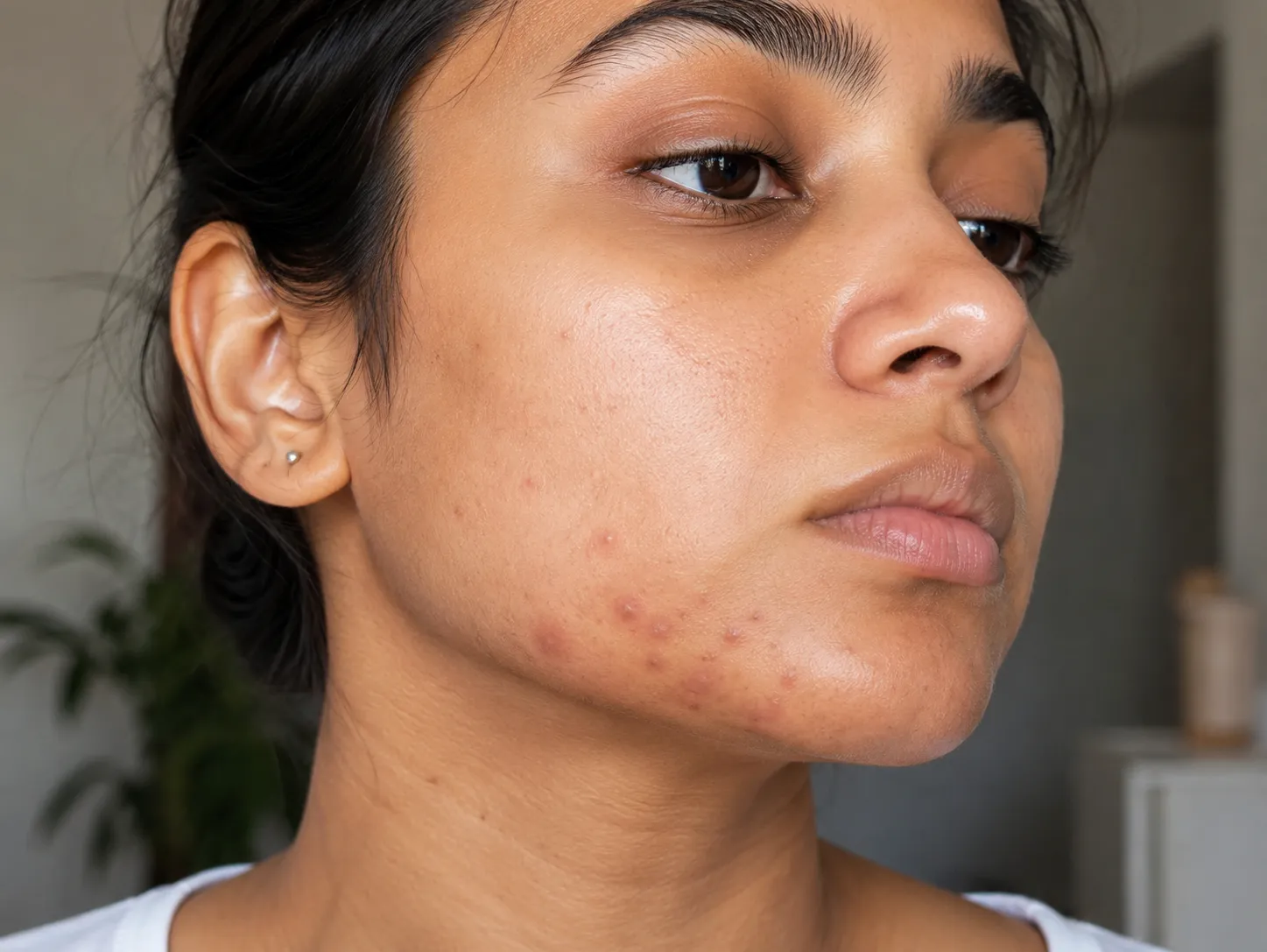
Acne that clusters along the jawline, chin, and lower cheeks in adult women — particularly when it flares predictably around your period — is hormonal acne. It’s driven by androgens (male hormones that women also produce) stimulating excess sebum production in the lower face.
This is distinct from teenage acne, which tends to appear across the forehead and nose. Hormonal acne in women in their 20s and 30s is increasingly common in India, and it rarely responds well to regular acne treatments because the root cause is internal, not topical.
Most likely culprits: Elevated androgens, insulin resistance (which raises androgen levels), PCOS.
5. Hair Fall and Thinning
Indian women have culturally been conditioned to have thick, long hair — which makes hair fall feel particularly alarming. But not all hair fall is equal. Hormonal hair fall tends to be diffuse (all over the scalp rather than concentrated patches), worsens around periods or postpartum, and is accompanied by other hormonal symptoms.
The most common hormonal driver is an excess of DHT (a potent androgen) that shrinks hair follicles over time — a condition called androgenic alopecia. Thyroid imbalance also causes significant hair loss, as does iron deficiency — which is epidemic among Indian women.
Most likely culprits: Elevated androgens, hypothyroidism, PCOS, postpartum hormonal shifts, iron deficiency.
6. Mood Swings, Anxiety, and Unexplained Low Mood
If your mood feels like it has a life of its own — swinging from fine to inexplicably tearful or irritable without a clear reason — hormones are almost certainly involved. Oestrogen and progesterone have direct effects on serotonin and GABA, your brain’s primary mood-regulating neurotransmitters.
The week before your period (the luteal phase), when progesterone rises and then drops sharply, is when mood disturbances are most pronounced — this is what drives PMS and, in more severe cases, PMDD (premenstrual dysphoric disorder).
Chronic cortisol elevation from ongoing stress also directly increases anxiety and reduces the brain’s ability to regulate emotional responses.
Most likely culprits: Oestrogen-progesterone imbalance, elevated cortisol, low thyroid.
7. Sleep Problems — Difficulty Falling or Staying Asleep

Hormones regulate your sleep cycle at multiple levels. Melatonin (your sleep hormone) is suppressed by blue light and stress. Cortisol should be low at night — if it stays elevated due to chronic stress, it makes it hard to fall asleep or causes you to wake at 3–4 AM and lie there with a racing mind. Low progesterone also disrupts sleep because progesterone has a natural calming, sleep-promoting effect.
For women approaching perimenopause, night sweats and temperature fluctuations (driven by oestrogen drops) are a significant source of sleep disruption.
Most likely culprits: Elevated cortisol, low progesterone, low melatonin, perimenopausal oestrogen decline.
8. Digestive Issues — Bloating, Constipation, IBS
The connection between hormones and gut function is profound and underappreciated. Oestrogen and progesterone both directly influence gut motility — which is why so many women experience constipation before their period (when progesterone is high and slows gut movement) and looser stools when their period begins (when prostaglandins increase gut contractility).
An imbalanced gut microbiome also affects hormonal health in return — particularly oestrogen metabolism (as discussed in the gut health article). The relationship runs both ways.
Most likely culprits: Oestrogen-progesterone fluctuations, thyroid imbalance, cortisol’s effect on gut motility.
9. Low Libido
A decline in sexual desire that isn’t explained by relationship factors or life stress often has a hormonal root. Testosterone (yes, women need it too, just in smaller amounts) plays a key role in libido. Low oestrogen — as seen in perimenopause or after prolonged stress — also reduces sexual desire and can cause physical discomfort.
This is one of the most common yet least discussed symptoms because of the cultural taboo around women’s sexuality in India. But it’s a legitimate hormonal signal worth addressing with your doctor.
Most likely culprits: Low testosterone, low oestrogen, elevated prolactin, high cortisol.
10. Brain Fog and Poor Concentration
Forgetting things mid-sentence, struggling to focus, feeling like your brain is wrapped in cotton wool — this is what hormonal brain fog feels like. It’s different from everyday distraction. It’s pervasive, frustrating, and makes even familiar tasks feel effortful.
Oestrogen is neuroprotective — it supports memory and cognitive function. When oestrogen drops (perimenopause, severe PMS, post-birth control), cognitive sharpness often drops with it. Thyroid hormones are also essential for brain function — even subclinical hypothyroidism (levels that fall “within range” but toward the low end) can cause significant cognitive dulling.
Most likely culprits: Oestrogen decline, hypothyroidism, elevated cortisol, insulin resistance.
11. Excessive Facial or Body Hair (Hirsutism)
Unwanted hair growth on the face (upper lip, chin, cheeks), chest, or abdomen in women is called hirsutism and is a classic sign of elevated androgens — particularly in PCOS. While some facial hair is normal and genetic for many Indian and South Asian women, a sudden increase or growth in new areas warrants hormonal investigation.
Most likely culprits: PCOS, elevated androgens, adrenal disorders, insulin resistance.
12. Cold Hands and Feet, Feeling Cold All the Time
If you’re always reaching for an extra layer while everyone around you is comfortable — or your hands and feet are perpetually cold even in Indian summer — this can be a sign of an underactive thyroid. Thyroid hormones regulate body temperature and metabolic heat production. When they’re low, the body quite literally runs cooler.
Most likely culprits: Hypothyroidism, anaemia.
Quick 5-Minute Practice ✨ Every evening before bed, do a 5-minute “body check-in.” Sit quietly, close your eyes, and mentally scan from head to toe — notice where you feel tension, fatigue, discomfort, or unease. Keep a simple notes app journal of recurring patterns: when do you feel most exhausted? When do your moods dip? When does your skin break out? Over 4 weeks, these notes become a powerful symptom map that you can share with your doctor for a far more productive conversation than trying to recall everything in a 10-minute consultation.
How to Balance Hormones Naturally — Where to Start

Stabilise Blood Sugar First
Insulin resistance is at the root of so many hormonal imbalances — particularly PCOS and androgen excess. The single most impactful dietary change for most Indian women is reducing refined carbohydrates (maida, white rice in excess, packaged snacks, sugar-heavy chai) and replacing them with complex carbs, protein, and healthy fats at every meal.
Eating protein at breakfast — eggs, paneer, Greek yoghurt, sprouts — prevents the blood sugar spike and crash cycle that drives insulin spikes throughout the day.
Prioritise Sleep Like It’s Medicine
No supplement, no diet, no skincare routine will fix your hormones if you are consistently sleeping fewer than 7 hours. Hormonal repair — particularly cortisol regulation, growth hormone release, and reproductive hormone production — happens almost entirely during sleep. 10 PM to 6 AM sleep is hormonally optimal. Screens off by 9:30 PM makes a measurable difference.
Manage Stress — Actively, Not Passively
“I’ll relax when things calm down” is not a stress management strategy — because things rarely calm down. Cortisol reduction requires deliberate daily practice. Even 10 minutes of pranayama (particularly anulom vilom and bhramari), a 20-minute walk outdoors, or a consistent journaling practice has been shown in studies to measurably lower cortisol levels over 4–6 weeks.
Get These Tests Done
If you’re experiencing multiple symptoms from this list consistently for more than 2–3 months, ask your doctor for:
- Complete thyroid panel (TSH, Free T3, Free T4 — not just TSH alone)
- Fasting insulin and blood glucose
- Full hormonal panel (LH, FSH, prolactin, DHEA-S, total and free testosterone)
- Vitamin D levels
- Complete blood count (to check for anaemia)
Many of these conditions are highly treatable once properly diagnosed. The key is getting the right tests — not just the most basic ones.
Frequently Asked Questions
Can hormonal imbalance cause weight gain even with a healthy diet?
Yes — this is one of the most common and frustrating experiences for women with hormonal imbalances. Hypothyroidism slows metabolism so significantly that a normal caloric intake leads to gradual weight gain. Insulin resistance causes the body to store fat — particularly visceral belly fat — even when diet hasn’t changed. Elevated cortisol also promotes fat storage. If you’re eating well and exercising but still gaining weight, please get your hormones checked before blaming willpower.
Is PCOS common in Indian women?
Very. Studies estimate that PCOS affects 9–22% of Indian women of reproductive age — one of the highest rates in the world. The high-carbohydrate Indian diet, Vitamin D deficiency, sedentary urban lifestyles, and chronic stress are all contributing factors. The good news is PCOS is very manageable with the right dietary, lifestyle, and medical interventions.
Can hormonal imbalance cause skin problems?
Absolutely — and this is the gut-skin-hormone connection that CGlows covers extensively. Hormonal acne (jawline breakouts), dullness from thyroid imbalance, excessive oiliness from androgens, and accelerated ageing from oestrogen decline are all direct skin manifestations of hormonal issues. Treating the root hormonal cause produces far better long-term skin results than any topical treatment alone.
At what age can hormonal imbalance start in women?
There is no minimum age. PCOS can develop in teenage years. Thyroid disorders affect women in their 20s and 30s with surprising frequency. Perimenopause — the gradual decline of reproductive hormones — can begin as early as the late 30s for some women. Stress-driven cortisol imbalances have no age limit whatsoever.
Can I balance my hormones naturally without medication?
For mild to moderate hormonal imbalances — yes, diet, sleep, stress management, and targeted supplementation (Vitamin D, magnesium, ashwagandha for cortisol) can produce significant improvement. For diagnosed conditions like PCOS, thyroid disorders, or severe hormonal deficiencies, medical treatment is usually necessary and appropriate. Natural approaches complement medical treatment — they don’t replace it when medication is clinically indicated.
How is hormonal imbalance diagnosed?
Through blood tests, primarily. A single test (like TSH only for thyroid) often misses the full picture — push for a comprehensive panel that includes multiple markers. Symptoms alone aren’t sufficient for diagnosis, but they guide which tests to run. Find a gynaecologist or endocrinologist who takes your symptoms seriously and doesn’t dismiss them as stress or anxiety.
Does birth control cause hormonal imbalance?
Hormonal contraceptives work by deliberately altering your hormonal environment. For some women, the transition on or off hormonal birth control triggers a period of imbalance while the body re-establishes its natural rhythm. Post-pill PCOS — where PCOS symptoms emerge or worsen after stopping birth control — is a recognised phenomenon. This doesn’t mean birth control is harmful, but it’s worth being aware of and discussing with your doctor.
The Bottom Line
Your hormones are not the enemy — they’re messengers. When they’re out of balance, they’re not failing you. They’re responding to everything your body is experiencing — your stress, your sleep, your diet, your environment.
The signs in this article are not things to be dismissed, pushed through, or masked with concealer and caffeine. They are invitations to pay attention — to your body, your lifestyle, and your health with the same care and intention you bring to everything else in your life.
If several of these signs resonate with you, please don’t wait for things to get worse. Get the right tests done, find a doctor who listens, and start with the foundational lifestyle changes — blood sugar stability, sleep, and stress management. These aren’t just good advice. For hormonal health, they are genuinely therapeutic.
Your body is talking. It’s time to listen.
Also read on CGlows:
- [Best Foods for Gut Health in India — Your Microbiome and Your Hormones]
- [Morning Routine for Women to Feel Energised All Day]
- [Benefits of Drinking Jeera Water on Empty Stomach]
Disclaimer: This article is for general informational purposes only and is not a substitute for professional medical advice, diagnosis, or treatment. If you suspect a hormonal imbalance, please consult a qualified gynaecologist or endocrinologist. Do not self-diagnose or self-medicate based on this article.
Discover more from CGlows
Subscribe to get the latest posts sent to your email.