
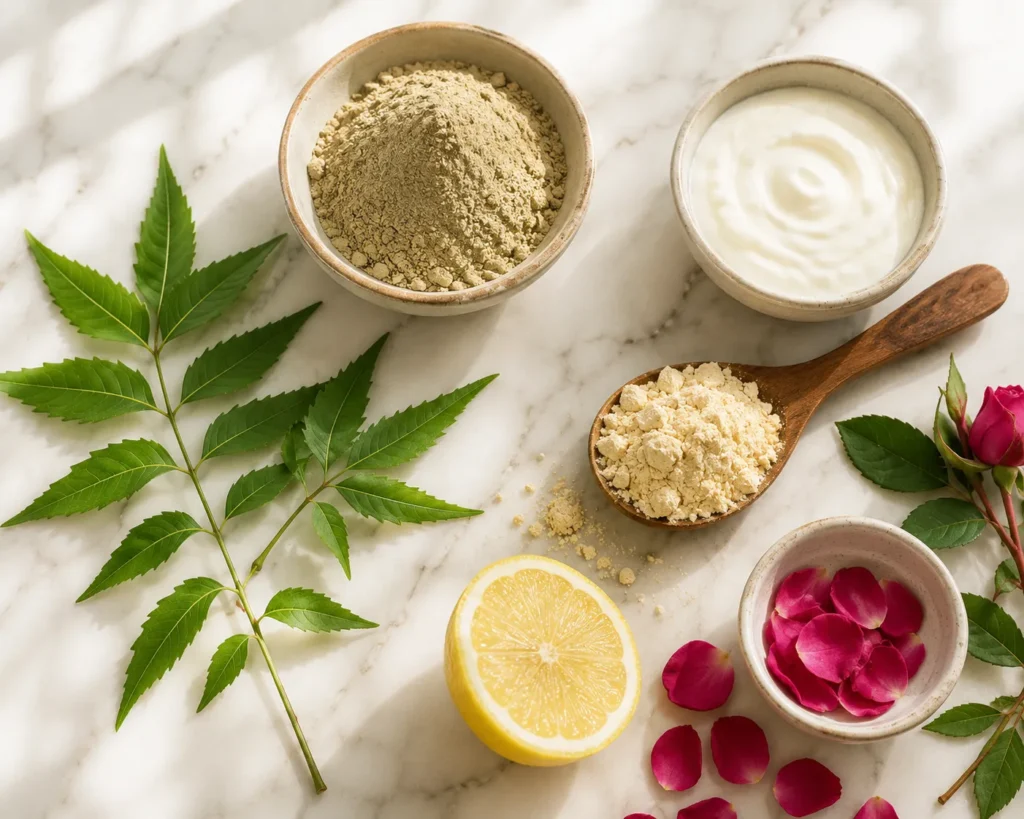

If you have oily skin, Indian summers feel like a special kind of torture. By 10 in the morning, your T-zone is already glistening. By noon, your foundation has disappeared. And by evening, your face looks like you’ve been deep-frying pakoras rather than sitting at your desk.
Sound familiar?
The good news is that oily skin in summer is 100% manageable — and you don’t need a fancy 10-step routine or expensive products to do it. The right face pack, used consistently, can control excess oil, minimise pores, prevent breakouts, and leave your skin looking matte and fresh even in 40-degree heat.
Here are the 9 best face packs for oily skin in Indian summer — from kitchen staples that have been trusted for generations to affordable drugstore picks that work without burning a hole in your wallet.
Why Does Oily Skin Get Worse in Summer?
Before the remedies, let’s quickly understand the “why” — because it actually changes how you approach the solution.
Your skin has sebaceous glands that produce oil (sebum) to keep it hydrated and protected. In summer, rising temperatures cause these glands to go into overdrive. Heat literally signals your body to produce more sebum. Add humidity to the mix, and you’ve got a combination that makes oily skin significantly worse than it is in winter.
The common mistake most people make is trying to strip all the oil away — using harsh cleansers, alcohol-based toners, and heavy clay masks every single day. This actually backfires. When you over-strip the skin, it panics and produces even more oil to compensate. The goal isn’t zero oil — it’s balanced oil production.
A good face pack for oily skin in summer should:
- Absorb excess sebum without completely stripping the skin
- Gently unclog pores
- Soothe inflammation (oily skin tends to get reactive in heat)
- Leave skin feeling clean but not tight
With that in mind, here are your best options.
9 Best Face Packs for Oily Skin in Indian Summer
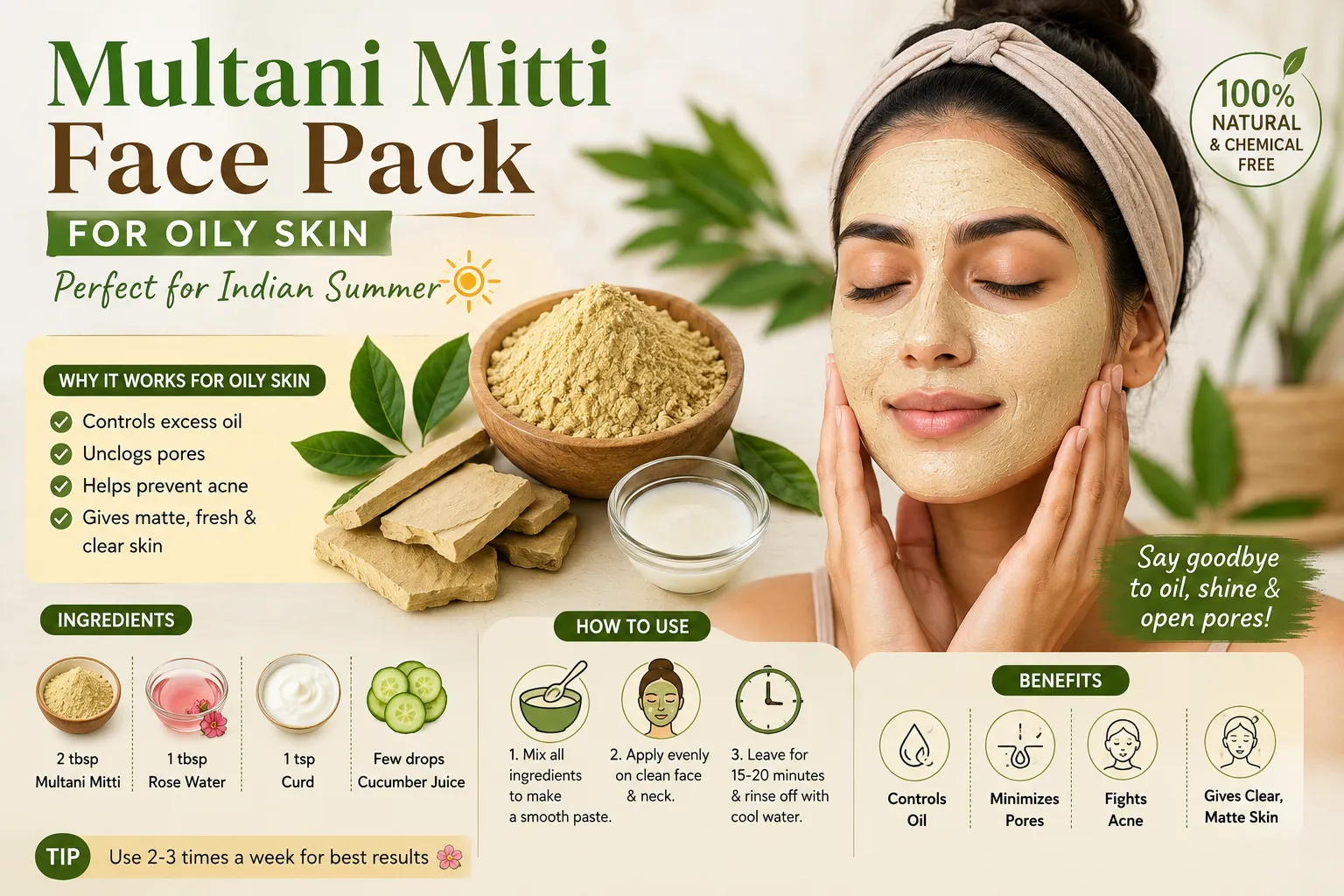
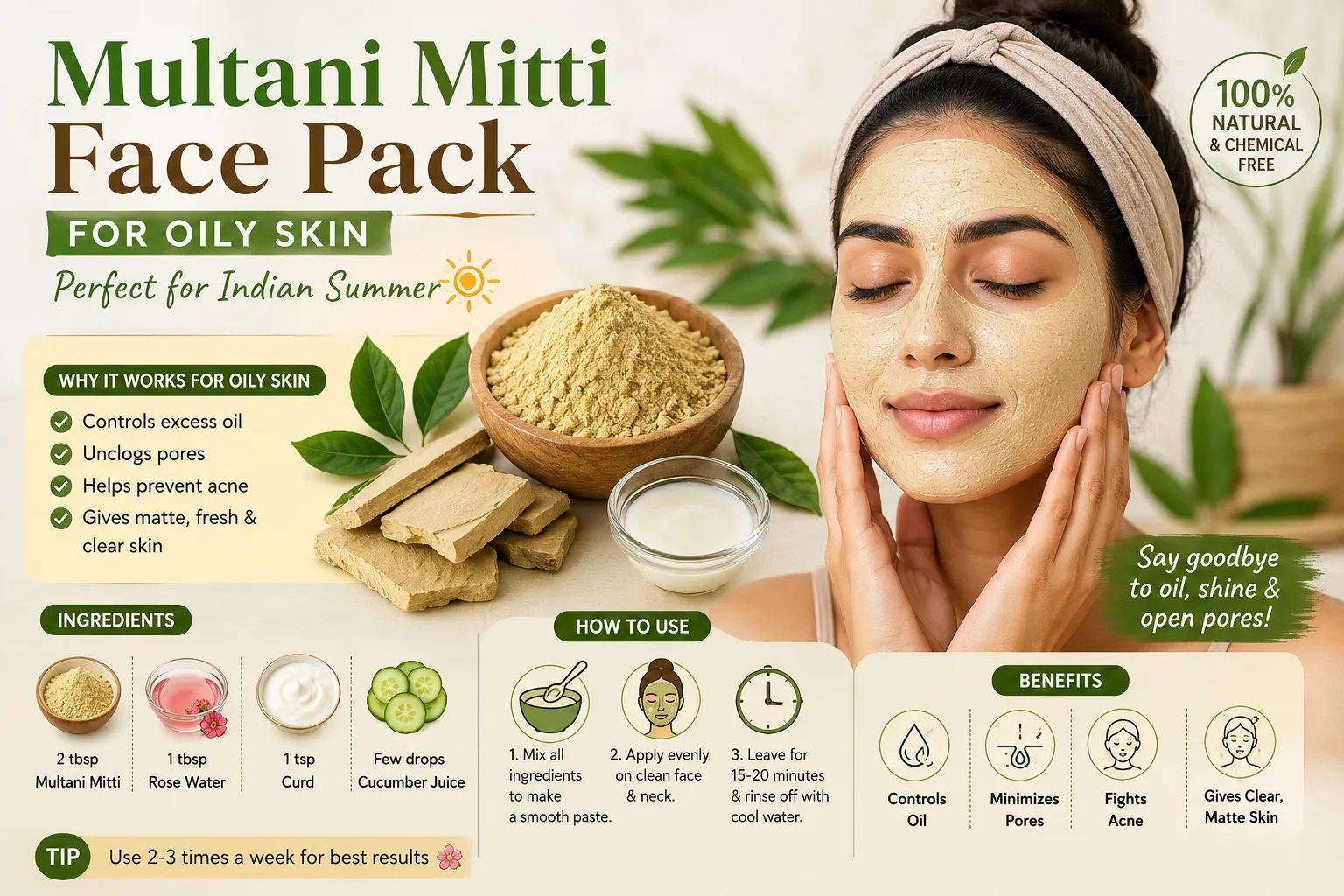
1. Multani Mitti and Rose Water Pack
If there’s one face pack that oily-skinned Indian women swear by, it’s this one. Multani mitti (Fuller’s Earth) is arguably the most effective natural oil absorber in existence. It draws out excess sebum, deep-cleanses clogged pores, and leaves skin visibly mattified.
Rose water balances the mix — it’s mildly astringent (great for tightening pores), has anti-inflammatory properties, and prevents the multani mitti from drying out the skin too aggressively.
How to make it: Mix 2 tablespoons of multani mitti with enough rose water to form a smooth, lump-free paste. Apply evenly on the face, avoiding the eye area. Let it dry for 15–20 minutes — you’ll feel it tightening. Rinse with cool water, gently massaging in circular motions.
Frequency: Twice a week. Not more — multani mitti is powerful and can cause dryness with overuse.
Skin tip: If you have combination skin, apply only on the T-zone and chin, not the drier parts of your cheeks.
2. Neem and Aloe Vera Pack
This one is particularly brilliant for oily skin types that are also acne-prone — which, in India’s humid summers, is a very common combination. Neem is one of Ayurveda’s most celebrated antibacterial and antifungal ingredients. It kills acne-causing bacteria, controls oil, and reduces redness. Aloe vera cools and soothes, balancing neem’s slightly drying effect.
How to make it: Grind 8–10 fresh neem leaves into a fine paste (or use neem powder — available at most kirana stores and on Amazon). Mix with 1 tablespoon of fresh aloe vera gel. Apply on the face, leave for 20 minutes, and rinse with normal water.
Frequency: 2–3 times a week.
Bonus: This pack also works as a spot treatment for active pimples. Apply a small amount directly on breakouts and leave overnight.
3. Besan, Turmeric and Curd Pack
Besan is the backbone of Indian skincare for a reason — it’s a natural exfoliant and mild oil absorber. When combined with turmeric (which has powerful anti-inflammatory and antibacterial properties) and curd (which contains lactic acid for gentle brightening), you get a face pack that does triple duty: controls oil, exfoliates dead skin, and brightens complexion.
How to make it: Mix 2 tablespoons of besan with a pinch of haldi and enough fresh curd to make a thick paste. Apply, leave for 20 minutes, and wash off while gently scrubbing to exfoliate.
Frequency: 2–3 times a week.
Note: If you’re fair-skinned or have a lighter complexion, use haldi very sparingly — a tiny pinch — to avoid temporary yellowing of skin.
4. Kaolin Clay and Lemon Pack
Kaolin clay is the gentler cousin of multani mitti. It’s white, fine-textured, and absorbs oil without being as aggressive — making it ideal for those with oily but sensitive skin. Lemon provides Vitamin C for brightening and helps tighten pores with its mild astringent properties.
How to make it: Mix 1 tablespoon of kaolin clay (easily available on Amazon or at chemists) with a few drops of fresh lemon juice and enough water or rose water to form a paste. Apply and leave for 12–15 minutes. Rinse with cool water.
Frequency: Twice a week.
Important: Always use lemon-based packs at night and apply SPF the next morning. Lemon can increase sun sensitivity.
5. Tomato and Cucumber Pack
This is your go-to pack for summer days when your skin feels hot, congested, and angry. Tomato contains lycopene and natural salicylic acid — yes, the same BHA you find in acne-fighting products — which helps unclog pores and control oil production. Cucumber cools, hydrates, and reduces puffiness.
Together, they make one of the most refreshing, skin-calming face packs for hot Indian summers.
How to make it: Blend half a small tomato with a 2-inch piece of cucumber into a smooth pulp. Apply directly on the face, leave for 15–20 minutes, and rinse. You can also add a teaspoon of raw honey to extend the hydrating benefits.
Frequency: Daily use is fine for most oily skin types given how gentle this pack is.
6. Sandalwood and Rose Water Pack
Sandalwood (chandan) has been used in Indian skincare for centuries — and for very good reason. It’s a natural antiseptic, oil-controlling, and skin-cooling ingredient. In summer heat, a chandan pack genuinely calms down reactive, oily skin and gives a beautiful mattifying effect that lasts for hours.
How to make it: Mix 2 teaspoons of pure sandalwood powder with rose water to make a smooth paste. Apply on the face, leave for 20 minutes until dry, and rinse with cool water. Your skin will feel noticeably smoother and cooler immediately.
Frequency: Twice a week.
Where to buy: Genuine sandalwood powder is available at most Patanjali stores, kirana stores that stock Ayurvedic products, or online from brands like Forest Essentials and Khadi Natural.
7. Rice Flour and Buttermilk Pack
Rice flour is an excellent natural exfoliant and oil absorber — it’s been used in Korean and Japanese skincare for centuries, but it’s equally effective for Indian skin types. Buttermilk (chaas) contains lactic acid that gently removes dead skin cells, controls oil, and lightly brightens the skin without irritation.
This pack is particularly good for those who find multani mitti or clay packs too harsh.
How to make it: Mix 2 tablespoons of rice flour with enough fresh buttermilk to make a smooth paste. Apply, gently massage in for a minute, and leave on for 15 minutes before rinsing.
Frequency: 2–3 times a week.
Quick 5-Minute Practice -Every Sunday evening, do a “weekly deep clean” for your oily skin: mix multani mitti with rose water, apply for 15 minutes while you relax, rinse off, and follow with a light application of aloe vera gel as a moisturiser. This one weekly ritual resets your skin’s oil balance, unclogs the week’s worth of pore congestion, and preps your skin for the week ahead. Takes 20 minutes total and makes a visible difference by Monday morning.
8. Green Tea and Honey Pack
Oily skin produces excess sebum partly because of oxidative stress and inflammation triggered by sun exposure and pollution — both of which are intense in Indian summers. Green tea is packed with antioxidants called catechins that neutralise this damage and naturally regulate sebum production over time. Honey adds antibacterial action and locks in just enough moisture.
How to make it: Brew a strong cup of green tea and let it cool completely. Mix 2 tablespoons of the brewed tea with 1 teaspoon of raw honey to make a thin liquid mask. Apply with a cotton pad or brush, leave for 15–20 minutes, and rinse. Alternatively, freeze brewed green tea into ice cubes and rub on oily areas for an instant pore-tightening effect.
Frequency: 3–4 times a week. This is gentle enough for regular use.
9. Papaya and Lemon Brightening Pack
Oily skin in summer often comes with an added problem — dullness. Excess sebum traps dead skin cells on the surface, making skin look thick, grey, and congested. Raw papaya contains papain, a natural enzyme that dissolves dead skin cells, while lemon provides Vitamin C to brighten and even out skin tone.
How to make it: Mash 3–4 small cubes of raw (unripe) papaya and mix with 1 teaspoon of fresh lemon juice. Apply on the face, leave for 15 minutes, and rinse thoroughly. Follow with a good moisturiser.
Frequency: Once or twice a week.
Note: This is a mildly exfoliating pack, so don’t use it on the same day you’re using another scrub or exfoliant.
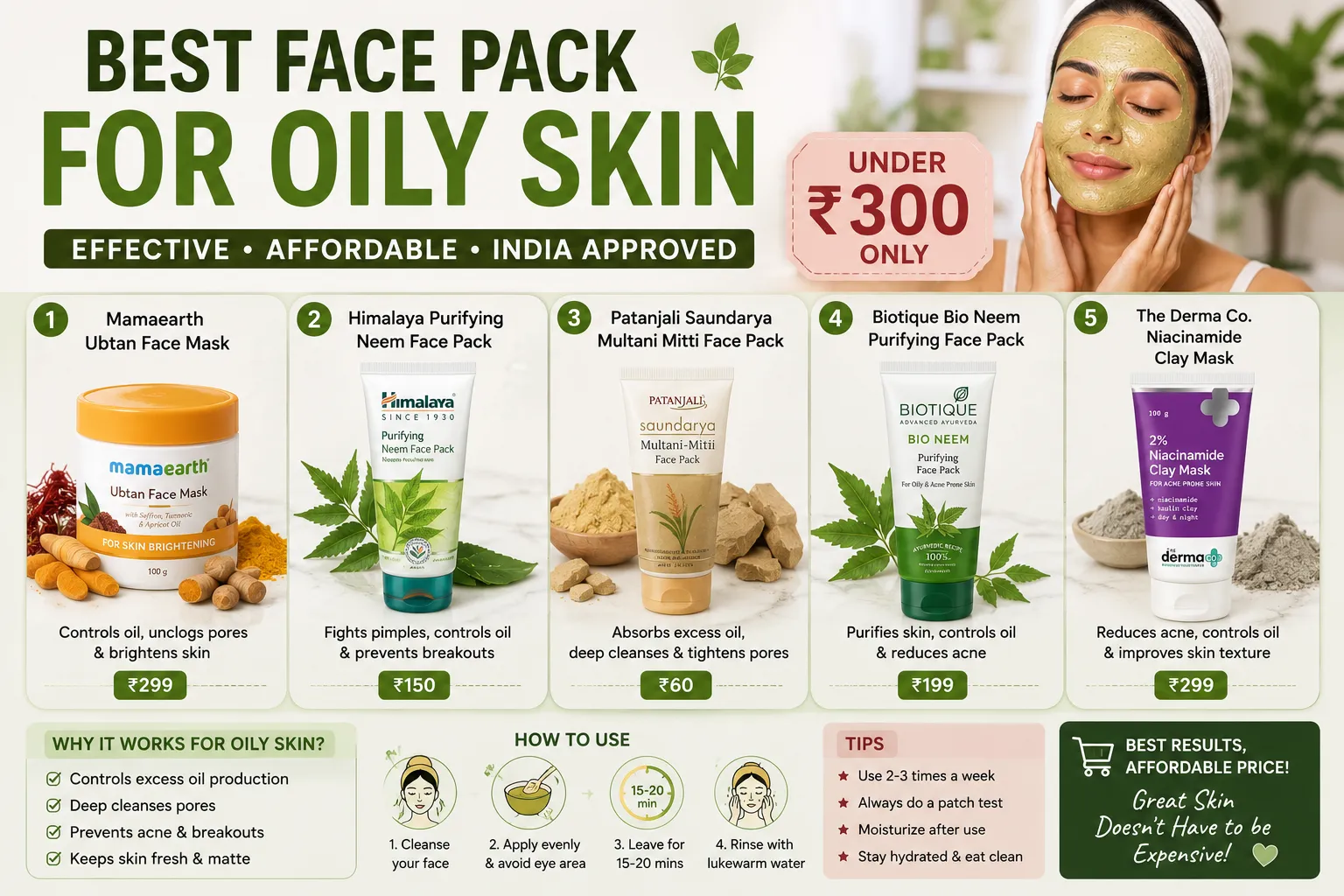
Best Drugstore Face Packs for Oily Skin Under ₹300
Sometimes you don’t have 20 minutes to mix ingredients — and that’s perfectly fine. These are the most effective, affordable store-bought face packs specifically suited to oily Indian skin in summer:
| Product | Key Ingredients | Price | Best For |
|---|---|---|---|
| Lotus Herbals White Glow Oatmeal & Yogurt Skin Whitening Scrub | Oatmeal, yogurt | ₹180 | Exfoliation + brightening |
| Himalaya Oil Control Lemon Face Pack | Kaolin, lemon | ₹155 | Daily oil control |
| Mamaearth Tea Tree Face Mask | Tea tree, kaolin | ₹249 | Acne-prone oily skin |
| Biotique Bio Mud Youthful Clarifying & Revitalizing Face Pack | Mud, clove | ₹199 | Deep pore cleansing |
| VLCC Snigdha Skin Whitening Face Pack | Kojic acid, saffron | ₹260 | Oily + pigmented skin |
How Often Should You Use a Face Pack for Oily Skin?
This is one of the most misunderstood parts of skincare for oily skin types. Using a face pack every day feels satisfying — but it actually disrupts your skin barrier over time and can lead to rebound oiliness, sensitivity, and breakouts.
The sweet spot is 2–3 times a week for most clay or exfoliating packs, and up to 4–5 times for gentler packs like green tea, tomato, or cucumber. Always moisturise after every face pack — yes, even if your skin is oily. Skipping moisturiser is one of the main reasons oily skin gets worse.
The Right Skincare Order for Oily Skin in Summer
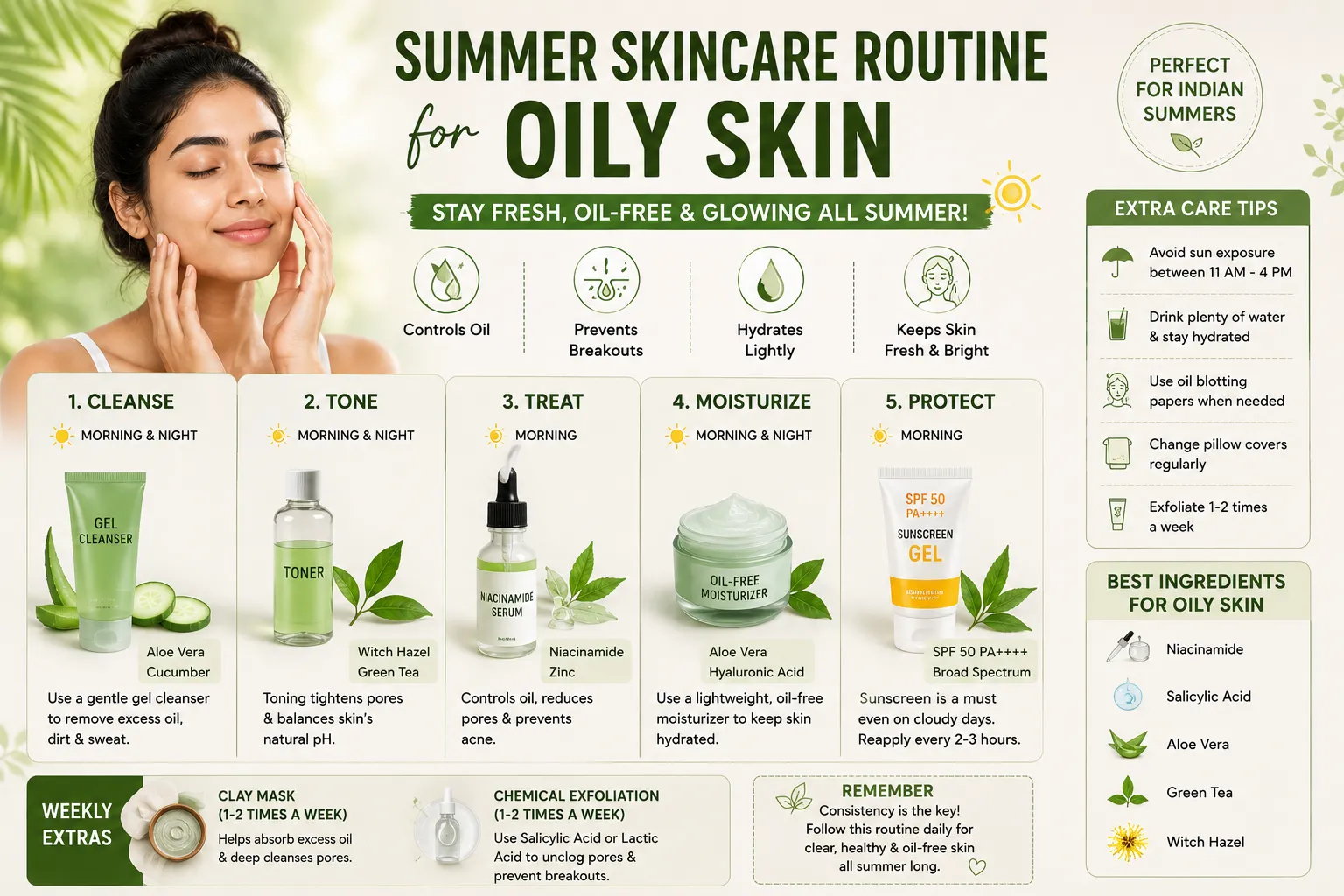
Face packs work best as part of a consistent routine. Here’s the ideal sequence for oily skin in Indian summer:
Morning: Gentle foaming cleanser → Lightweight toner (rose water or green tea) → Oil-free gel moisturiser → SPF 30 or higher (non-negotiable)
Evening: Micellar water or cleansing oil to remove sunscreen → Foaming cleanser → Face pack (2–3 times a week) → Aloe vera gel or lightweight serum → Oil-free moisturiser
Can I use a face pack every day if I have very oily skin?
Gentle packs like tomato-cucumber or green tea can be used daily. Clay-based packs like multani mitti or kaolin should be limited to twice a week — using them daily will over-dry the skin and cause more oiliness as a rebound effect.
Should I moisturise after a face pack if I have oily skin?
Absolutely yes. Skipping moisturiser after a face pack leaves skin dehydrated, which triggers the sebaceous glands to produce even more oil to compensate. Choose a water-based, oil-free gel moisturiser — something like Neutrogena Hydro Boost Gel or Plum Green Tea Moisturiser works brilliantly for oily skin.
Which is better for oily skin — multani mitti or besan?
Both are excellent, but they serve slightly different purposes. Multani mitti is a stronger oil absorber and deep pore cleanser — use it when your skin is very congested. Besan is gentler and also exfoliates — better for regular use and if your skin is oily but also sensitive to clay.
Can I use these face packs if I have both oily and acne-prone skin?
Yes — in fact, most of these packs are ideal for acne-prone oily skin. Neem+aloe vera and green tea+honey packs are particularly beneficial as they target the bacteria that cause acne while controlling oil. Avoid heavily exfoliating packs on active, inflamed breakouts.
Why does my skin feel tight after a face pack? Is that normal?
Some tightness immediately after removing a clay or multani mitti pack is normal and temporary. But if your skin feels dry, flaky, or uncomfortable for a long time after washing off the pack, it means the pack was left on too long or you’re using it too frequently. Always follow up with a moisturiser and reduce usage frequency.
Does SPF matter for oily skin in summer?
It matters more than anything else in your routine. UV exposure worsens oil production, causes pigmentation, and accelerates skin ageing. Use a lightweight, non-comedogenic SPF 30+ sunscreen every morning — options like Minimalist SPF 50 or Re’equil Oxybenzone and OMC Free Sunscreen are great for oily skin as they don’t feel greasy. Read Top 5 Matte Sunscreens Under ₹500 for a Sweat-Proof Summer Glow
The Bottom Line
Oily skin in Indian summer is challenging — but with the right face pack routine, it’s absolutely manageable. Multani mitti, neem, besan, and green tea are your best friends. Use them 2–3 times a week, always moisturise after, never skip SPF, and your skin will look significantly less oily, less congested, and genuinely healthier within 2–3 weeks.
The goal isn’t to eliminate all oil from your skin — it’s to bring it to a healthy, balanced level. And with these remedies, that’s entirely achievable without spending a fortune.
Also read on CGlows:
- [How to Remove Tan from Face at Home — 10 Proven Remedies]
- [Ayurvedic Face Care Routine for Glowing Skin]
- [How to use aloe vera gel on face overnight — the complete guide]
Disclaimer: These remedies are for general skincare use. Always patch-test a new ingredient on your inner wrist before applying it to your full face. If you have a skin condition, active cystic acne, or allergies, consult a dermatologist before trying new treatments.
Discover more from CGlows
Subscribe to get the latest posts sent to your email.