
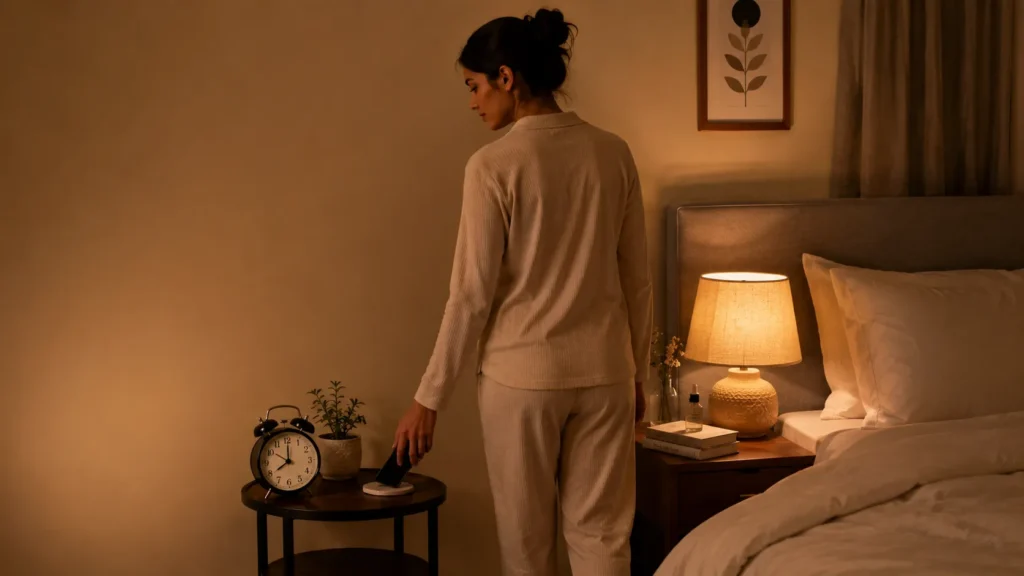

At 8 PM, your body is quietly asking for darkness—while your phone is blasting mini sunrises into your eyes. Each “just one more reel” is a tiny hit of stimulation your skin and brain have to pay for the next morning. What if a simple rule—phone off after 8 PM—could mean deeper sleep, calmer thoughts and a brighter face in the mirror?
Why Your 8 PM Phone Habit Is Secretly Exhausting Your Brain
How blue light confuses your body clock
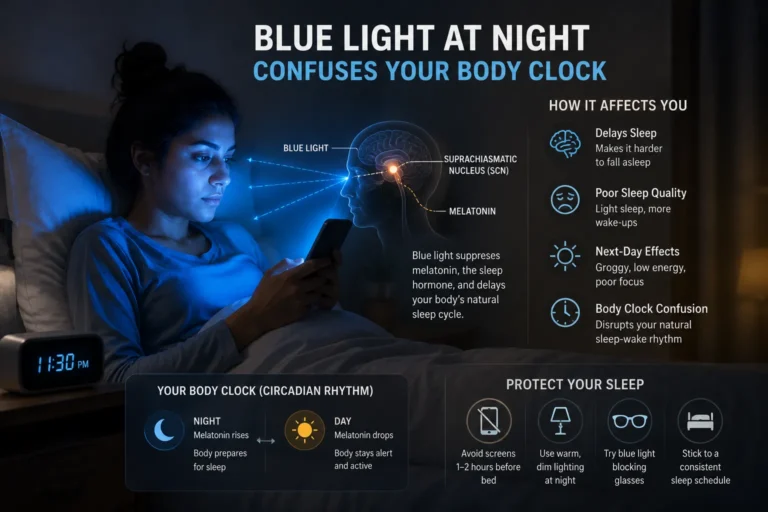
The screens you use after sunset emit blue light, which signals your brain to stay awake by suppressing melatonin, the hormone that helps you fall asleep. When melatonin is delayed, your natural circadian rhythm shifts, making it harder to fall asleep and reducing overall sleep quality.
Studies show that restricting smartphone use before bedtime improves sleep, mood and working memory, confirming how strongly evening phone habits affect brain function.
Night scrolling, stress hormones and “wired but tired” brain
Late-night social media and news can increase mental arousal and stress, triggering the release of cortisol, a stress hormone that keeps your brain alert when it should be winding down. This “wired but tired” state means you feel exhausted yet unable to fully relax, which harms memory, focus and emotional balance the next day.
Over time, this pattern can make it harder to concentrate, regulate mood and maintain consistent energy through the day.
The Hidden Link Between Late-Night Screen Time and Dull, Tired Skin
Poor sleep quality and visible skin changes
Sleep is when your skin repairs damage, balances hydration and strengthens its barrier. When smartphone use before bed worsens sleep quality, research shows measurable changes in skin surface properties and optics, such as increased roughness and dullness. Even in people without prior sleep problems, just seven nights of poor sleep from smartphone usage can visibly impact the skin.
Fragmented or delayed sleep also interferes with collagen repair, making fine lines and under-eye puffiness more noticeable over time.
Blue light, inflammation and breakouts
Excessive exposure to blue light from screens has been linked with oxidative stress and inflammation in skin cells, contributing to faster aging signs and potential pigmentation issues. When late-night scrolling also raises stress and disrupts sleep, it can worsen oil production and inflammation, which are both associated with breakouts.
Combining poor sleep, stress and blue light exposure creates a “perfect storm” for tired, reactive skin the next morning.
The 8 PM Digital Sun-Down Routine: What To Do Instead of Scrolling
Simple steps to switch off (even if you “need” your phone)
If 8 PM feels too early, treat it as a “digital sun-down” target, not perfection. Practical steps:
- Lower screen brightness and turn on night mode at least 1–2 hours before 8 PM.
- Set your phone to Do Not Disturb and keep only emergency calls allowed.
- Move your phone out of the bed area—on a shelf or desk across the room.
Research shows that even partial restrictions on bedtime mobile use improve sleep and daytime performance, so small changes still matter.
Building a skin + brain-friendly night ritual
Use the time after 8 PM to send clear “it’s night now” signals to your brain and skin:
- Gentle cleansing and a simple nighttime skincare routine to support barrier repair.
- Dim lights in your room to help melatonin rise naturally.
- Calming activities like light stretching, journaling or reading a physical book instead of scrolling.
This consistent routine teaches your body that darkness plus low stimulation equals deep rest, which shows up as better mood and fresher-looking skin by morning.
Quick 5-Minute Practice: Your 8 PM Digital Sun-Down Reset
Use this as a sidebar or callout box in your blog layout.
Minute 1: Power Down Ritual
- Lock your phone.
- Turn on Do Not Disturb.
- Place it face-down, away from your bed (desk, shelf or charging station).
Minute 2: Light and Space Reset
- Switch off overhead lights.
- Turn on a single warm lamp or bedside light.
- Turn off TV, tablet and laptop completely, not just standby.
Minute 3: Three-Calm-Breaths Pattern
- Inhale through your nose for 4 counts.
- Hold gently for 2 counts.
- Exhale slowly for 6 counts.
- Repeat for 3 full breaths.
Minute 4: Micro Body Scan
- Soften your forehead and eyes.
- Unclench your jaw, let your tongue rest low.
- Drop your shoulders slightly.
- Loosen your hands and fingers.
Minute 5: One-Worry, One-Action Note
- Write down one worry or unfinished task.
- Write one tiny action you’ll take tomorrow about it.
This helps your brain “park” stress so it does not chase you into sleep.
FAQs: Digital Detox at Night for Better Skin and Brain
1. Does turning off my phone at 8 PM really improve sleep and brain function?
Yes. Restricting mobile phone use before bedtime has been shown to improve sleep quality, reduce pre-sleep arousal and support better mood and working memory. By reducing blue light exposure and mental stimulation, your brain can follow its natural sleep-wake rhythm more easily.
2. How does night-time phone use affect my skin overnight?
Poor sleep quality caused by smartphone usage leads to measurable changes in skin characteristics, including dullness and altered surface texture. When scrolling also increases stress and delays sleep, it disrupts the skin’s nightly repair processes and can worsen signs of fatigue.
3. Is blue light from my phone really bad for my skin?
Excess blue light has been associated with oxidative stress and inflammation in skin cells, which can contribute to premature aging and pigmentation concerns. Combined with late-night use that reduces sleep quality, this effect becomes more noticeable over time.
4. What if I need my phone as an alarm clock?
You can still keep your phone, but treat it like an alarm device, not a screen. Place it away from your bed, keep Do Not Disturb on and avoid unlocking it after your chosen cut-off time. This setup lets you wake on time without constant exposure to blue light and notifications at night.
5. How many hours before sleep should I stop using my phone?
Many experts recommend avoiding screens at least 1–2 hours before sleep to allow melatonin to rise naturally. In studies, limiting smartphone use specifically during the period right before bed produced meaningful improvements in sleep quality and next-day functioning.
6. Can an 8 PM digital detox help with dark circles and tired eyes?
Better sleep quality supports healthy circulation and repair around the eye area, which can reduce the appearance of puffiness and fatigue-related darkening. Limiting nighttime screen exposure also reduces eye strain, which may help your eye area look less tired.
7. What else should I include in a skin-friendly night routine after putting my phone away?
After your digital sun-down, focus on gentle cleansing, a hydrating moisturizer and maybe a targeted treatment like a serum suited to your skin. Pair this with low light, calming breathing or stretching and consistent bedtimes to support both skin barrier repair and brain recovery overnight.
Conclusion: Start Your 7-Day Digital Sun-Down Challenge
Your 8 PM phone habit is not just a “time pass”—it is a daily decision that shapes how your brain thinks, how your skin repairs and how you feel in your own body the next morning. Treating 8 PM as your digital sunset gives your nervous system and skin a clear, reliable window to rest deeply, repair and reset.
Start with a simple 7-day experiment: commit to your 8 PM digital sun-down, follow the 5-minute practice and track your sleep, mood and skin in a small note each morning. Then, invite your readers or followers to join you—share your progress, before-after reflections or photos, and encourage them to try their own digital sun-down week.
Save this post to revisit your evening routine — and share it with the woman in your life who’s been chasing a glow that no product has delivered yet. Sometimes the answer isn’t in the next buy. It’s in the first real rest.
More science-backed wellness rituals for modern Indian women — only on CGlows.
Discover more from CGlows
Subscribe to get the latest posts sent to your email.