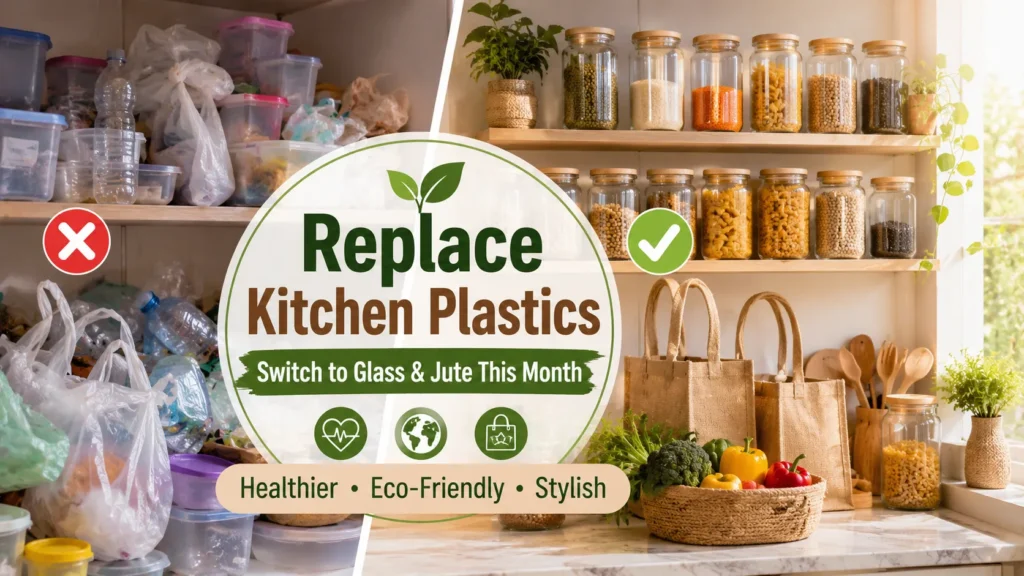

You heat your leftovers in plastic. You store your dal in plastic. You carry your groceries home in plastic. And somewhere in that cycle — quietly, without warning — tiny chemical compounds are making their way into your food, your body, and your hormones. The scariest part? Your BPA-free container isn’t saving you. Here’s what’s actually happening in your kitchen, and the simple swap that changes everything.
The Plastic Problem Nobody Talks About Honestly
For decades, we were told plastic was safe, convenient, and modern. Then came the BPA warnings. So we switched to “BPA-free” alternatives and felt better about it.
But here’s what the label doesn’t say.
Even BPA-free plastics can contain BPS, BPF, and other bisphenol variants — which may be just as harmful to the body as BPA itself. You traded one chemical for a chemical cousin that hasn’t been studied nearly as long.
And it gets worse when heat is involved.
Plastic containers break down with repetitive use — releasing more chemicals as they’re exposed to dishwashers, microwaves, and steaming foods. That scratched container you’ve been reheating your rice in? It’s been shedding microplastics into your meal every single time.
This isn’t fear-mongering. In 2024, microplastics were discovered inside human blood, lungs, and even placentas. The body is accumulating what the kitchen is producing.
The good news: the solution is sitting in your grandmother’s storage cabinet, and it costs less than another set of Tupperware.
Why Glass Is the Smarter, Safer Switch
Glass Doesn’t Lie to You
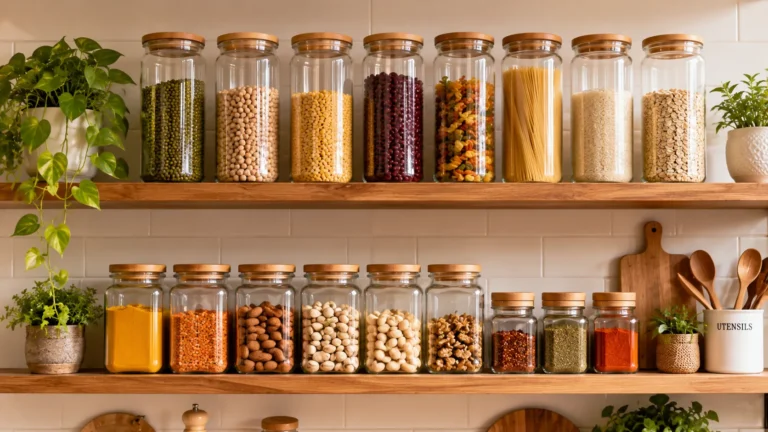
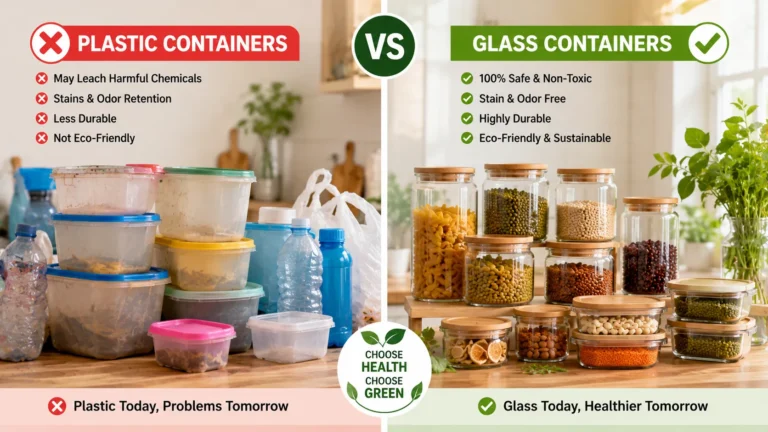
Glass is a chemically inert material — it won’t leach harmful chemicals like BPA or phthalates into your food, regardless of how hot it gets, how long you store food in it, or how many times it goes through the dishwasher.
What you put in is what you get out. No chemical transfer. No hidden contamination. No slow degradation over time.
It Keeps Food Tasting Like Food
Glass has a non-porous surface that doesn’t absorb food odours, flavours, or stains — so yesterday’s curry won’t ghost your salad tomorrow. Anyone who has ever opened a plastic container that permanently smells of garlic knows exactly why this matters.
Glass Is Actually the Cheaper Long-Term Choice
Yes, glass containers cost more upfront. But a good borosilicate glass container lasts years — sometimes decades — without warping, staining, or degrading. You’re not buying replacements every year because the lid cracked or the container turned cloudy. The math is simple.
It Works Everywhere
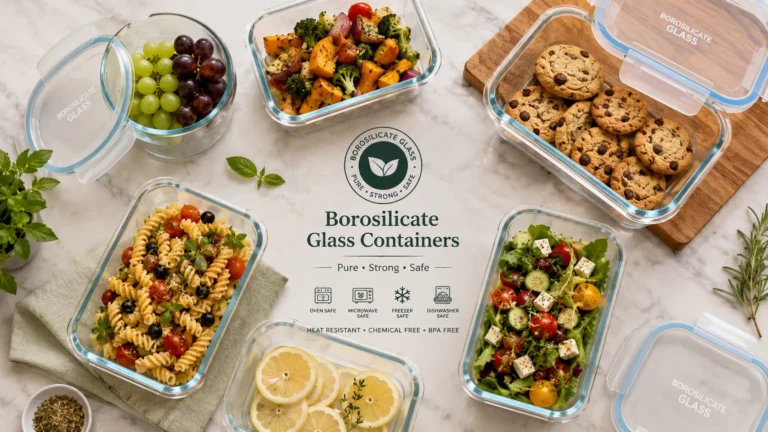
Oven. Freezer. Microwave. Refrigerator. Glass handles all of it without releasing anything into your food. Plastic, on the other hand, was never designed for the heat cycles most of us put it through daily.
Why Jute Deserves a Place in Your Kitchen Too
What Even Is Jute?
Jute is a natural plant fibre — one of the most abundant, biodegradable, and affordable materials on earth. It’s been used in Indian households for generations and is now reclaiming its place as a serious sustainable alternative to plastic bags, storage pouches, and kitchen organisers.
Jute for Kitchen Storage Makes More Sense Than You Think
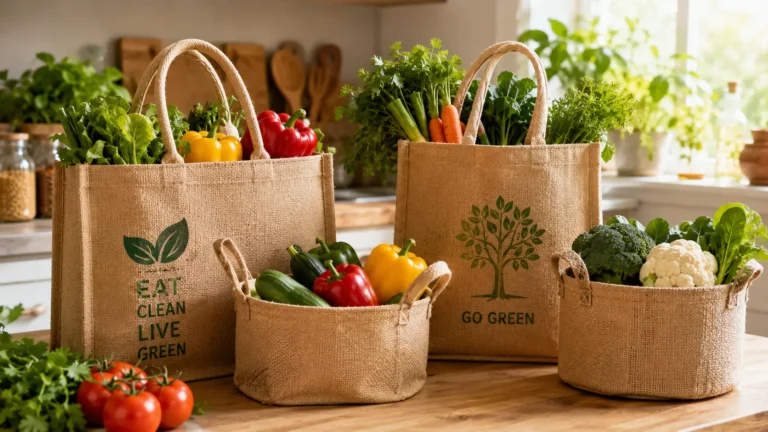
Jute breathes. Onions, potatoes, garlic, dry grains, and lentils last longer in breathable jute bags than sealed plastic ones because the natural fibre allows air circulation, preventing the moisture buildup that causes premature rotting and fungal growth.
Plastic bags suffocate dry produce. Jute bags let it live.
The Environmental Numbers Are Stark
A single plastic bag takes 400–1,000 years to decompose. A jute bag biodegrades naturally within 1–2 years. The average Indian kitchen goes through hundreds of plastic bags a year — most of which end up in landfill or waterways, not the recycling bin.
Switching to jute storage bags for your pantry staples is one of the lowest-effort, highest-impact changes you can make.
Jute Is Also Beautiful
This one matters more than it sounds. Ugly alternatives don’t stick. Jute has a warm, natural texture that makes your kitchen feel intentional and lived-in — like someone thoughtful uses it. That aesthetic motivation is real and it sustains the habit.
What to Replace First: Your Plastic-Free Kitchen Starter List
You don’t need to throw everything out at once. Start here, this month:
Replace immediately (high heat / daily contact):
- Plastic containers used for reheating food → glass containers with locking lids
- Plastic water bottles → glass or stainless steel bottles
- Plastic cling wrap → beeswax wraps or glass containers with lids
Replace next (dry storage):
- Plastic bags for storing onions, garlic, potatoes → breathable jute pouches
- Plastic grocery bags → jute tote bags
- Plastic cereal or lentil packets decanted into plastic containers → glass jars
Replace gradually (lower priority):
- Plastic cutting boards → bamboo or wood
- Plastic cooking spoons and ladles → stainless steel or wood
- Plastic colanders and sieves → stainless steel
FAQ: Everything You Want to Know About Going Plastic-Free in the Kitchen
Q1: Is BPA-free plastic actually safe for storing and reheating food?
Not entirely. Many plastics now contain BPS, BPAF, and other toxic substitutes that may be just as harmful as BPA — especially for hormones and child development. “BPA-free” is a marketing label, not a safety certification. The safest rule is to avoid heating any food in plastic, regardless of what the label says.
Q2: What are the best glass containers for Indian kitchens specifically?
Look for borosilicate glass containers — they handle temperature extremes without cracking, making them safe to go from freezer to microwave to dishwasher. Wide-mouth glass jars work wonderfully for storing dal, rice, spices, and pickles. Rectangular glass containers with locking lids are ideal for storing cooked curries and sabzi in the fridge.
Q3: Do jute bags actually keep vegetables fresh longer than plastic?
Yes — particularly for produce that needs to breathe, like onions, garlic, potatoes, and ginger. Plastic traps moisture which accelerates rotting. Jute’s natural fibres allow air to circulate, keeping dry produce at the right humidity and extending its shelf life meaningfully. This is also why traditional Indian storage methods used cloth and jute pouches long before plastic existed.
Q4: Is glass too fragile for everyday use in a busy kitchen?
It takes adjustment, but it’s more manageable than people expect. Borosilicate glass is significantly more durable than standard glass. Designating a low, stable shelf specifically for glass containers, handling them with both hands, and choosing containers with rubberised lids goes a long way. Most people find that after the first few weeks, handling glass becomes second nature.
Q5: How do I start a plastic-free kitchen on a tight budget?
Start with one swap at a time. Glass jars from finished pickle or jam bottles are completely free and work perfectly for storing spices, grains, and pulses. Repurpose before you buy. When you do purchase new items, prioritise replacing the containers you heat food in most frequently — that’s where chemical exposure is highest.
Q6: Are there affordable jute products available in India for the kitchen?
Absolutely. Jute products are widely available across India — at local kirana stores, eco-lifestyle brands, and online marketplaces. Jute storage bags for vegetables, pantry organisers, and shopping bags are among the most affordable sustainable alternatives available, often cheaper than premium plastic equivalents. Indian-made jute products also have a significantly lower carbon footprint than imported plastic alternatives.
Q7: How long does it take to fully transition to a plastic-free kitchen?
Most households can make the most impactful switches in under a month without it feeling overwhelming. Focus the first two weeks on replacing anything you heat food in. Spend the next two weeks on dry storage. Don’t aim for perfection — aim for meaningful reduction. Even replacing 60% of your kitchen plastics dramatically reduces your daily chemical exposure.
Conclusion: Your Kitchen Is Either Working For You or Against You
The kitchen is the most intimate room in your home. It’s where you nourish your family, where morning chai happens, where comfort food gets made. It deserves materials that match that intention.
Glass and jute aren’t trends. They’re returns — to the way kitchens were before plastic became the default. Safer, cleaner, more beautiful, and kinder to the environment.
You don’t need a complete overhaul tonight. You just need to start somewhere this month.
Pick one plastic container in your kitchen right now — the one you use most, the one you heat food in most often — and commit to replacing it with glass this week. Share this with a friend who’s been talking about living more intentionally. Small kitchens, changed habits, real impact.
More sustainable living ideas for modern Indian women — only on CGlows.
Discover more from CGlows
Subscribe to get the latest posts sent to your email.